
How to E-Verify ITR Through Net Banking
Its income tax retun filing season. Once you're done with the e-filing process, the next step is to verify the ITR to make it valid and acceptable to the Income Tax Department.
Monjima GhoshUpdated 2 min read

Table of contents11 sections
Introduction
Its income tax retun filing season. Once you're done with the e-filing process, the next step is to verify the ITR to make it valid and acceptable to the Income Tax Department. One of the most convenient methods to e-verify your ITR after you file an income tax return is through net banking. If you go for the net banking e-verification method, then you can save a lot of time and effort. In this article, we'll guide you through the simple steps to e-verify your ITR using net banking.
Step-by-Step Guide to E-Verify ITR Through Net Banking
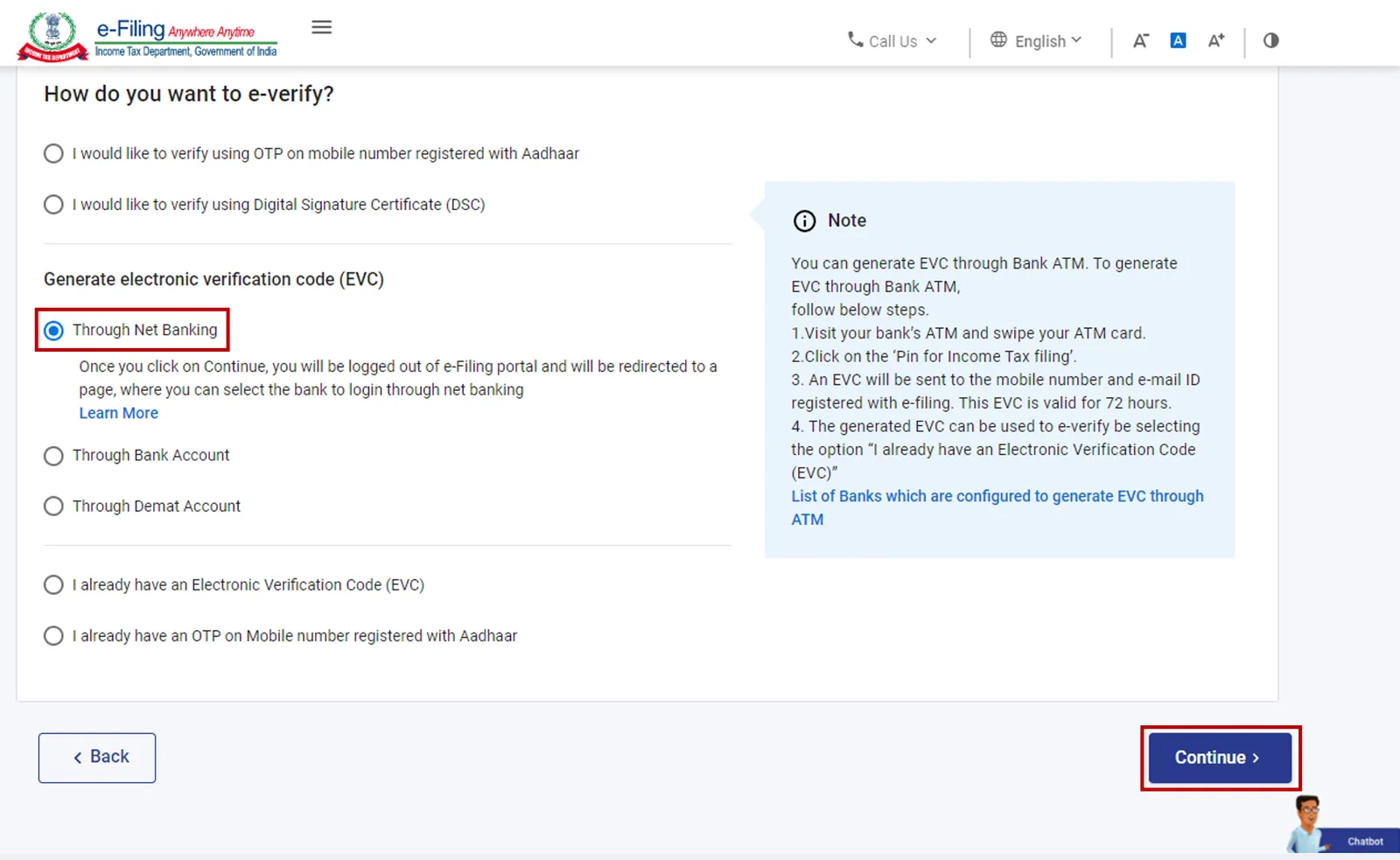
Step 1: Choose 'Net Banking' on the E-Verify Page
Firstly, you have to file your return on the ITR portal. Once you have successfully filed your ITR on the e-Filing portal, navigate to the e-Verify page. Here, you will find various options for verification such as E-verification via DSC. E-verification via EVC, etc. Choose "Through Net Banking" and then click on "Continue."
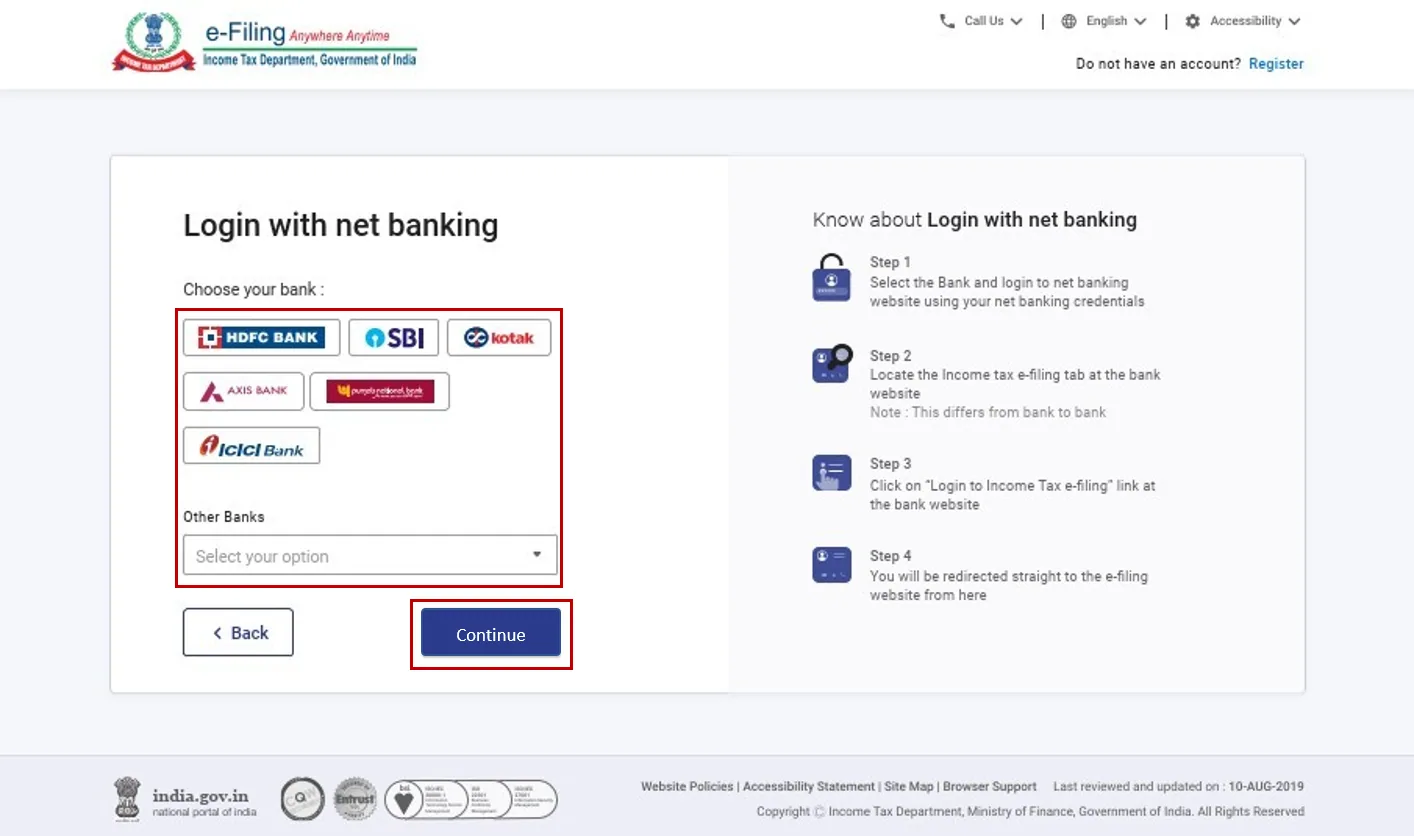
Step 2: Select Your Bank
In this step, you need to select your bank from the list provided. This is the bank through which you want to e-verify your ITR. Click on "Continue" after selecting your bank.
Step 3: Read and Understand the Disclaimer
It's essential to read and understand the disclaimer provided on this page before proceeding. Once you have gone through it, click on "Continue."
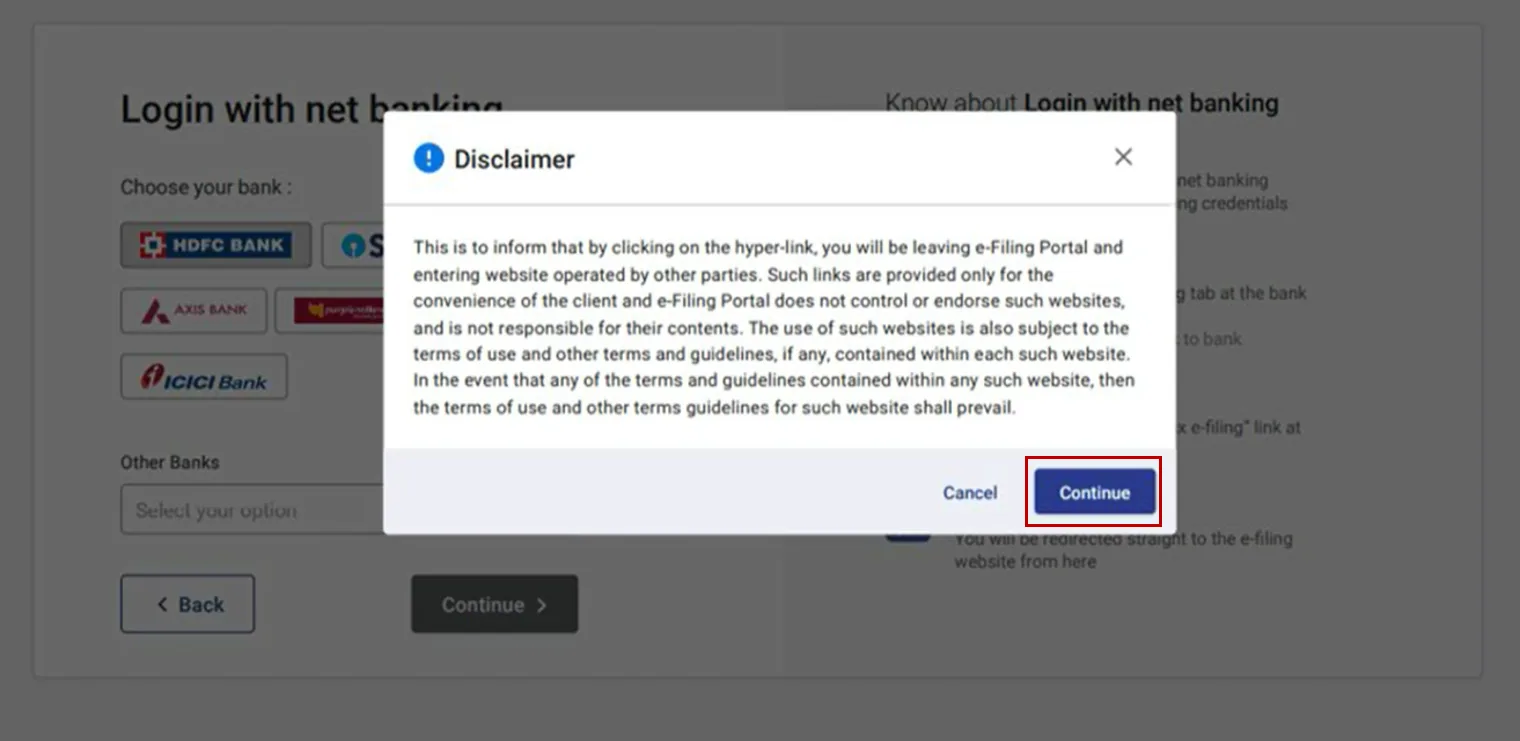
Note: After this step, you will be redirected to the Net Banking login page of your chosen bank.
Step 4: Log in to Your Net Banking Account
Use your Net Banking user ID and password to log in to your account.
Step 5: Access e-Filing from Your Bank's Website
Look for the link to access e-Filing from your bank's website and click on it.
Note: You will be logged out of your Net Banking account and automatically logged in to the e-Filing portal.
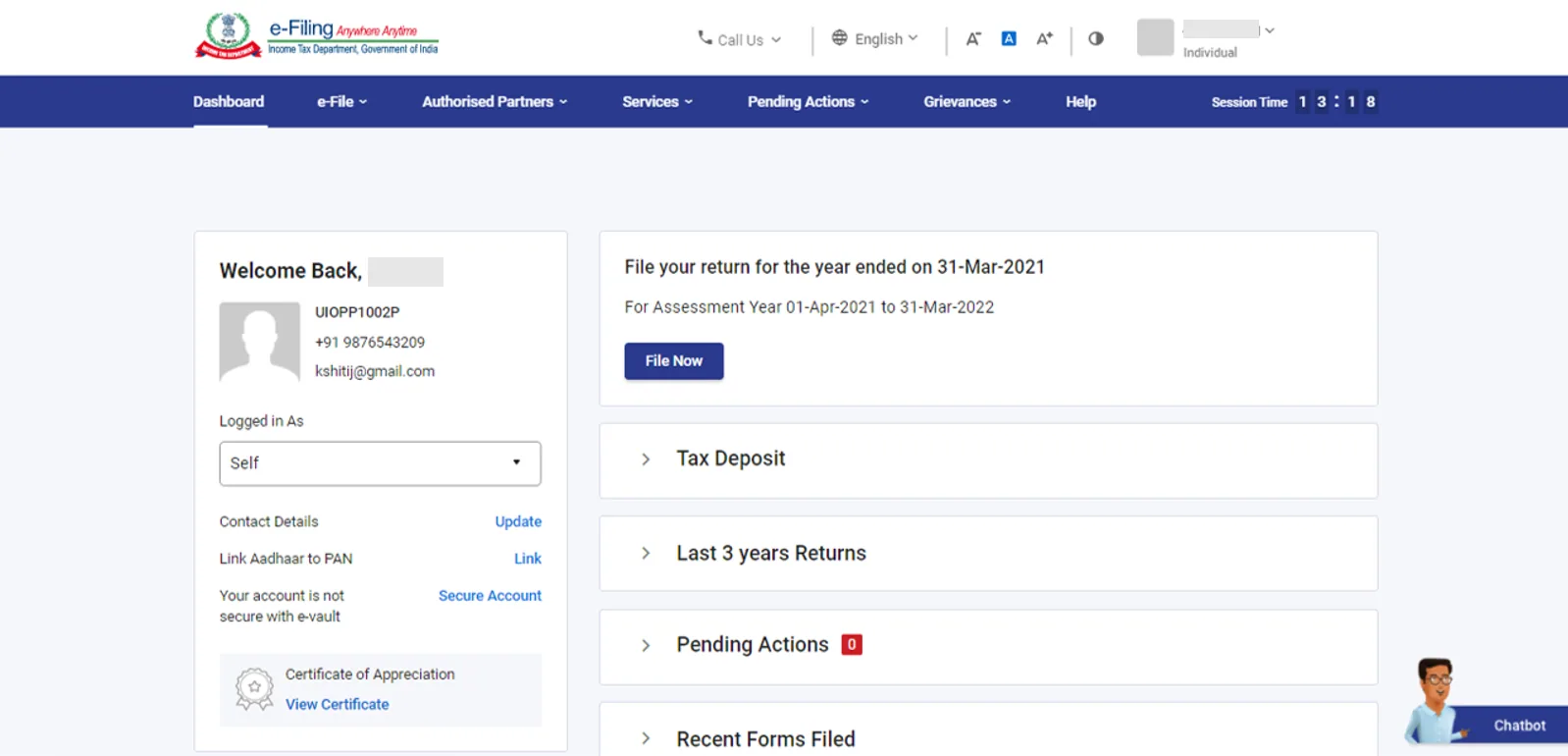
Step 6: Go to the E-Filing Dashboard
After successful login, you will be directed to the e-Filing Dashboard. Locate the respective ITR form that needs to be verified and click on "e-Verify."
Step 7: Success Message and Transaction ID
After successful e-verification, a success message page will show along with a unique Transaction ID. It is essential to keep a note of this Transaction ID for future reference. Moreover, you will receive a confirmation message on your registered email ID and mobile number on the e-Filing portal.
Conclusion
E-verification of ITR through net banking is a swift and secure method that ensures the validity of your income tax return. Following the simple steps outlined in this article will help you complete the process hassle-free, saving you from unnecessary paperwork and ensuring compliance with tax regulations. E-verify your ITR with ease and stay stress-free during tax season!
Frequently asked questions
What is E-Verification of ITR?
E-verification of ITR is the process of digitally verifying your income tax return using methods like net banking, Aadhaar OTP, or bank account-based OTP.
Is E-Verification Mandatory?
Yes, e-verification is mandatory to validate your ITR and complete the filing process.
Can I E-Verify ITR for Previous Years?
Yes, you can e-verify ITR for previous years as well.
Is E-Verification Safe?
Yes, e-verification through net banking is a secure method, as it involves two-factor authentication and encryption.

Written by
Monjima is a lawyer and a professional content writer at LegalWiz.in. She has a keen interest in Legal technology & Legal design, and believes that content makes the world go round.
All articles by Monjima GhoshServices related to this article
Everything here is handled online by our specialists, start to finish.
Comments