
Accounting
HSN Code Explained: Meaning, Structure & How to Find HSN Code
If you have ever raised a GST invoice or reviewed your GST returns, you have already encountered an HSN code.
4 min read

Quarterly returns prepared and filed by chartered accountants. Until you file, nobody you deducted tax from can claim credit for it.
A few details, then secure checkout. Your expert takes it from there.
Starting at₹4,699+ Govt. Fees
 4.7/5 Ratings On Google
Prefer to talk to someone first?
What the return reports, when it is due, and why the person you deducted from is waiting on it.
Anyone liable to deduct tax at source has to file a TDS return. It is a quarterly statement made to the Income Tax Department setting out the tax deducted or collected, what it was deducted on, and what has been paid over to the government for the period.
Tax is deducted on a defined set of transactions, from salaries and payments to professionals and contractors to rent above a threshold, each at its own prescribed rate. Which form the return goes on depends on what was paid and to whom.
Filing matters to somebody other than you. The person the tax was deducted from claims credit for it when they file their own income tax return, and they can only do that once the deductor has filed. Until then the money has left them and appears nowhere they can use it.
A TDS return has to agree with the challans already paid. Reconciling the two is where the work is.
A return is only due where tax has actually been deducted. Where nothing was deducted in a quarter, no return arises for it.
Filed by 31 July.
Filed by 31 October.
Filed by 31 January.
Filed by 31 May. This is the odd one out, at two months after the quarter ends rather than one.
A deductee claims the benefit of the tax deducted when they file their own return, and only where the deductor has filed. Until then the money has left them and shows up nowhere they can use it, which is what turns a late filing into a phone call.
A deductor issues a certificate to each person tax was deducted from, stating what was taken and against what. Deductions have to be on record before the certificate can be issued, and people ask for them.
₹200 for every day of delay, up to the amount of the TDS itself, and a separate penalty of between ₹10,000 and ₹1 lakh under section 271H on top of it. None of it is recoverable.
Four of these are quarterly returns. The fifth is not a return at all, and its deadline is nothing like theirs.
| Attribute | What it reports | Who files it |
|---|---|---|
| Quarterly returns | ||
| TDS on salaryTax deducted from the salaries paid to employees during the quarter, employee by employee. | Every employer deductingAny employer paying salaries above the exemption limit. This is the form most businesses with staff file. | |
| TDS on other paymentsTax deducted from payments to residents other than salary: professional fees, contractor payments, rent, commission and interest among them. | Any deductorAnyone deducting on a payment to a resident that is not a salary. | |
| TDS on payments abroadTax deducted from payments made to a non-resident or a foreign company. The rates and the treaty position both differ from a domestic deduction. | Anyone paying a non-residentAny deductor making a payment to a non-resident or a foreign company. | |
| Tax COLLECTED at sourceTCS rather than TDS: tax collected by a seller from a buyer on specified goods and transactions. A different statement from all the ones above. | Collectors, not deductorsAnyone required to collect tax at source. A business can be both a deductor and a collector, and then files both. | |
| Filed per transaction | ||
| TDS on a property purchaseTax deducted on the transfer of certain immovable property. It is a challan-cum-statement, not a return: it reports one transaction and pays the tax in the same act. | The buyer of the propertyFiled within 30 days of the end of the month the deduction was made in, not on the quarterly calendar. A buyer following the quarterly dates is late, and the ₹200 a day fee runs from the actual deadline. | |
| Next step | ||
Swipe the table sideways. Open any attribute to read the detail behind both answers.
Had a great experience with LegalWiz for my trademark registration. The service was smooth, and the after sales support was excellent. Although the filing took around 3 days, the team stayed connected throughout, provided clear updates, and there were no communication issues. Overall, a very professional and reliable experience.
Had a wonderful experience. The team was very supportive, responsive and completed everything on time. Thank you for the excellent support.
Jignesh was very helpful and amazing while filling the compliance form for my business. Will take your service again.
Good support team. No hindrance in executions. Go for it.
JIGNESH BHAI, I wanted to take some time to sincerely thank you for your incredible support with my MSME registration through LegalWiz. From start to finish, Jignesh Bhai, your guidance, patience, and professionalism made what could have been a stressful and confusing process feel completely smooth and manageable. You took the time to explain every step clearly, answered all my questions patiently, and ensured that nothing was left uncertain. Your attention to detail and dedication truly stood out, and it gave me a lot of confidence throughout the process. I really appreciate the effort, care, and commitment you put into helping me. Jignesh Bhai, your service has been exceptional, and I couldn’t have asked for a better experience. Heartfelt thanks once again!
Highly recommend services from Legalwiz. Got my LLP conversion process faster. Helpful staff.
Limited Liability PartnershipHad a great experience working with the team! They handled my LLP registration smoothly, guided me clearly through every step, and were always quick to respond. Really appreciate their professionalism and support. Highly recommended!
They are so quick and highly professional and experienced in the industry to carry out the requirement. Loved their services.

Trademark RegistrationVery fast & timely service. The team was very helpful and helped me find out if the brand name was available or not over the call itself without any extra cost or charge. Brilliant service, very clear communication, timely delivery & transperant pricing. Cheers!
Trademark RegistrationSatisfied with your unit service and fee grateful to connect with you service providers staff thanks regards Shivlal
File INC-20AI am very much satisfied with their service for INC 20 A. i will recommend them and definitely will keep in mind for any other service.
Close a Private Limited Companyexcellent, i appreciate accountability and transparency in the process
Private Limited CompanyLegalwiz is doing its best to give good service to clients.
Trademark RegistrationRecently got Trade Mark registered
Trademark RegistrationIt was an amazing experience from the support team. Thank you...
GST RegistrationHad a Seamless Experience in registering for GST. Been associated with them for 5 yrs now, and have done several LLP and GST registrations. Happy with their service, so i keep coming back.
Four things, and the last two change every quarter.
The Tax Account Number of the deductor, which is quoted on the return and on every challan.
The acknowledgement receipts for the tax deposited with the government during the quarter.
What was deducted, from whom, on what, and at what rate.
The payments the deductions were made against, with the invoice details.
Step 01
Step 02
Step 03
Subject to government processing time.
Five working days from the day your data reaches us.
2 of 5 working days
3 of 5 working days
Subject to government processing time.
Leverage best deals offered by the industry leaders and experience mutual growth.












Still have a question? Our team is happy to help, at no charge and with no obligation to buy anything.
Any assessee who has deducted tax at source.
Where no tax has been deducted, no return arises. The obligation follows the deduction, not the registration.
A certificate issued by the deductor to the person tax was deducted from, on the deductor’s letterhead, recording the deduction and the particulars behind it.
Deductions happen as often as the transactions do, which makes them hard to keep track of, so it is worth asking for a certificate wherever one applies and has not been given.
Through a bank using challan 281, quoting the entity’s TAN. The deadline is the 7th of the following month.
March is the exception. Tax deducted in March is deposited by 30 April, not by 7 April.
A fee of ₹200 for each day of delay under section 234E, capped at the amount of the TDS itself.
A separate penalty of between ₹10,000 and ₹1 lakh can also be levied under section 271H, on top of the fee.
Quarterly, and the last quarter is the odd one out:
If you have ever raised a GST invoice or reviewed your GST returns, you have already encountered an HSN code.
4 min read
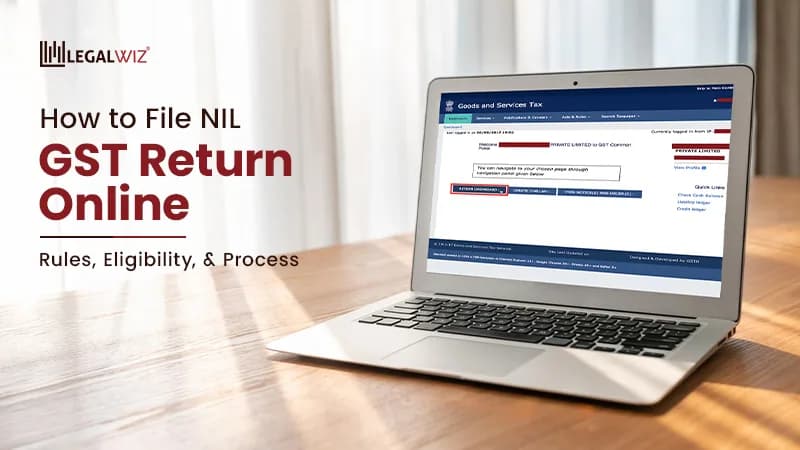
GST return filing remains mandatory even when a business records no transactions in a tax period.
5 min read

Corporate tax affects how much profit a company keeps after meeting its legal obligations.
4 min read