
Trademark Class 11: Lighting, Heating & Cooking Goods
Fans, LED bulbs, geysers, gas stoves and water purifiers. Here is what sits in Class 11, what does not, and what it costs to file.
Ankit PandyaUpdated 4 min read
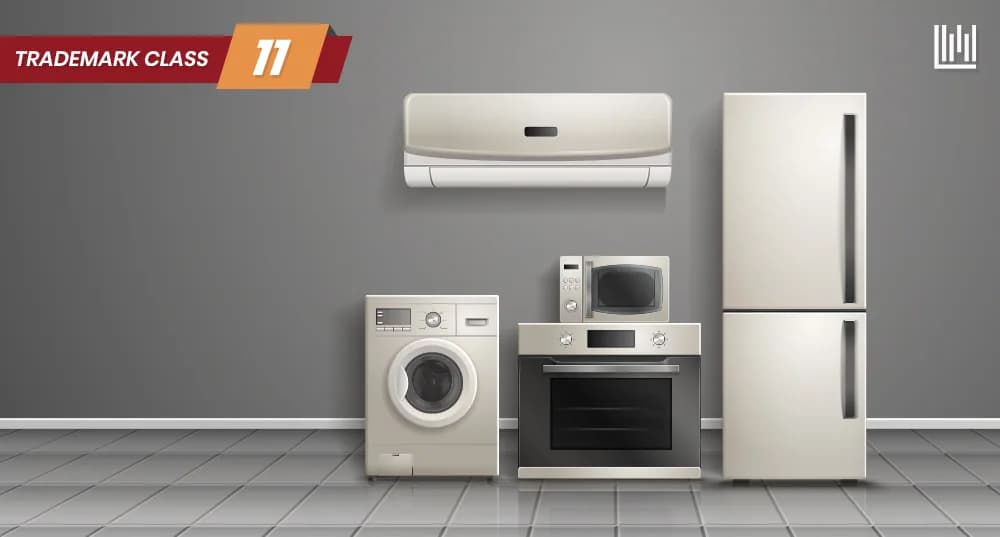
Table of contents9 sections
If you make or sell LED lights, fans, geysers, gas stoves, water purifiers or air conditioners, your brand goes in trademark class 11. Class 11 is for apparatus and installations that light, heat, cool or refrigerate, cook, dry, ventilate, supply water or serve sanitary needs. It only covers goods. Installing or repairing these things is a service, and that goes in a different class.
You will want the cost up front. The government fee for an e-filed Form TM-A is Rs 4,500 per class if you are an individual, startup or small enterprise. Everyone else pays Rs 9,000 per class. Once the mark is registered, it stays valid for 10 years.
A quick way to decide: ask what the product does. Electricity has nothing to do with it. A gas stove and an electric kettle both sit in Class 11, and so do a tap, a hand dryer and a street light. If your product gives light, heat, cold, cooked food or clean water, Class 11 is the first place to look. Then check the edges below.
What goods come under Class 11?
Group | Typical goods |
|---|---|
Lighting | LED bulbs, tube lights, chandeliers, street lights, torches |
Heating | Room heaters, geysers, electric blankets (not for medical use) |
Cooling and ventilation | Air conditioners, ceiling fans, air coolers, refrigerators, freezers |
Cooking | Gas stoves, microwave ovens, electric kettles, electric cooking utensils |
Water and sanitary | Water purifiers, taps, showers, toilets, hand dryers |
The official note to the class names air-conditioning apparatus, electric kettles and electric cooking utensils as included goods. The full list runs to over 3,400 entries, so guessing is a bad idea. Search your product in the table below, or put it through our class search tool before you file.
Class 11: Lighting, heating and cooking apparatus
3,413 goods in this class
| Class | Term |
|---|---|
| Class 11 | Accelerated ageing furnaces |
| Class 11 | Accelerated ion devices [for treating the air] |
| Class 11 | Accent lights for indoor use |
| Class 11 | Accumulation boilers |
| Class 11 | Accumulators (Heat -) |
| Class 11 | Accumulators (Steam -) |
| Class 11 | Acetylene burners |
| Class 11 | Acetylene flares |
| Class 11 | Acetylene generators |
| Class 11 | Adjustable coated baffle grease filters [parts of cooker hoods] |
Showing 1 to 10 of 3,413 entries
What does not belong in Class 11?
Most wrong-class filings start right here.
Product | Usually filed in |
|---|---|
Mixer grinders, washing machines, dishwashers, vacuum cleaners | Class 7 |
Switches, sockets, wires, circuit breakers, smart plugs, mobiles | Class 9 |
Floor cleaners, disinfectants | Class 3 |
Candle holders | Class 21 |
If a machine does a job like grinding or washing, it generally lands in Class 7. Our guide to Class 7 for machinery brands shows where that line falls.
Wiring and gadgets go to Class 9. If that is closer to what you sell, read the Class 9 guide for electronics brands. Smart bulbs confuse people the most. The bulb itself is Class 11. The app that controls it is software, and software sits in another class.
Two real cases that show why the class matters
TTK Prestige is best known for pressure cookers. It got a Class 11 registration back in 1981 for “installations for cooking”. In February 2023 the Delhi High Court stopped K.K. & Company Delhi from selling gas stoves under the PRESTIGE name. The court read that old registration as covering gas stoves, and noted that someone who sees a Prestige cooker and a Prestige stove will assume they come from the same maker. That was an interim order.
The other case is recent. In March 2026 a Delhi High Court division bench let an interim bar stand against Kent RO, the water purifier brand, selling fans under KENT. Kent Cables had shown prima facie use of the name for fans since about 2009. The court also said that being in the same class does not automatically make two products similar. All of this is prima facie, and the trial is still to come.
What I take from both: a broad, well-worded goods description can save you years of trouble. And being strong in one Class 11 product does not mean the name is yours for every other Class 11 product.
Why register a Class 11 brand at all?
Lighting and appliances get copied a lot. Look-alike LED bulbs, fan brands and “similar sounding” water purifiers turn up on marketplaces all the time. A registration lets you act against infringement under the Trade Marks Act, 1999, and you can use the ® symbol. Until then you can only put ™ on the product.
How to file a Class 11 trademark
Step | What happens | Fee or time |
|---|---|---|
1. Search | Check your name and similar marks | Before filing |
2. File Form TM-A | Online, one fee per class | Rs 4,500 or Rs 9,000 |
3. Examination | Registry may raise objections | Reply within 1 month |
4. Journal | Mark is published, others can oppose | 4-month window |
5. Registration | Certificate issued | Valid 10 years |
Most sources say the whole thing takes 12 to 24 months. An objection or an opposition will stretch it. Take that as a range, and it can change.
Don’t rush step 1. Our note on how to check trademark availability in India walks you through it.
The fees above come from the First Schedule of the Trade Mark Rules 2017 on ipindia.gov.in. For the rest of the bill, see the government fee and total cost of trademark registration.
If the examination report raises an objection, you have one month to answer. A properly argued trademark objection reply works much better than a rushed one.
Take care with the goods description. “LED bulbs” is narrower than “apparatus for lighting”, so cover what you sell today and what you plan to sell in the next two or three years. Not sure about the class? Read how to choose the right trademark class first.
Fans and water purifiers are both Class 11, so one class fee covers them together. If your brand also ships an app or some electronics, you will need filing in more than one class.
What should you register first?
Start with the word mark. It generally protects the name whatever font you use. File the logo next, as a separate application. Product names only need their own filing if they will be sold on their own, like a sub-brand for a fan range.
What a client said
Vishvam PG filed with us in June 2026 and wrote: “Had a great experience with LegalWiz for my trademark registration.” He also said the filing took around 3 days and the team stayed in touch throughout.
Ready to file?
If your goods sit in Class 11, LegalWiz can run the search and take your trademark registration forward, with the class and goods wording checked first.
Frequently asked questions
What products are covered under Trademark Class 11?
Class 11 includes electrical appliances like LED lights, water purifiers, air conditioners, fans, ovens, and other lighting and climate control equipment.
Are LED bulbs and smart lights covered under Class 11?
Yes, lighting products such as LED bulbs, smart lamps, and fixtures fall under Trademark Class 11.
Does Class 11 include kitchen appliances like microwaves or dishwashers?
Yes, Class 11 includes cooking appliances and electric kitchen equipment used in residential or commercial settings.
Are electronic devices like TVs and smartphones included in Class 11?
No, electronic gadgets fall under the trademark class for electronics and software (Class 9), not Class 11.
Can I register a brand name before launching my electrical product?
Yes, you can file based on intended use. You'll need to show your bona fide intent to use the mark commercially.
What happens if I choose the wrong class?
If you choose the wrong trademark class, your application may still get processed, but your trademark won’t be legally protected for the relevant goods or services. This means others could legally use a similar mark in that correct class, and you wouldn’t have grounds to stop them. Moreover, trademark fees are non-refundable, so you'd have to file a new application in the correct class and pay the fees again.
How long does registering a trademark take?
Trademark registration in India typically takes 6 months to 2 years, depending on any objections or third-party opposition. For a detailed overview of the process, read our complete guide on trademark registration process in India.
How long is my trademark valid, and how often should I renew it?
In India, a registered trademark is valid for 10 years. You must renew it every 10 years—either within 6 months before or after expiry—to maintain your rights.

Written by
Content & Marketing Manager
Ankit Pandya is a marketing and content strategist with 8 years of experience across FMCG, D2C, and B2B. He writes about content strategy, digital marketing, AI-driven growth, and emerging industry trends, combining practical insights with real-world marketing experience.
All articles by Ankit PandyaServices related to this article
Everything here is handled online by our specialists, start to finish.
Comments