
Trademark Class 10 in India: Protecting Medical Device and Surgical Instrument Brands
What goes into Class 10, what does not, and how to file so your brand name holds up.
Ankit PandyaUpdated 4 min read
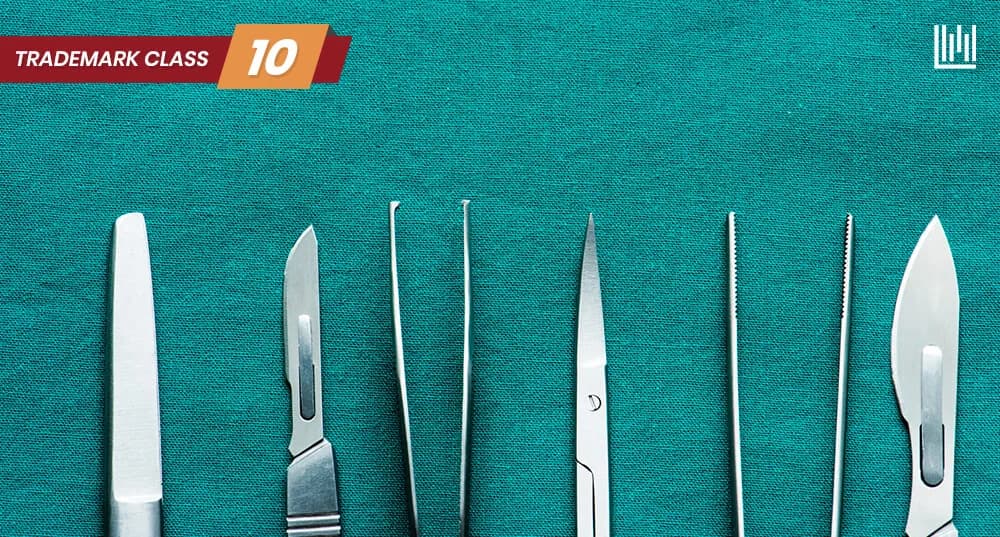
Table of contents7 sections
What goes into Class 10, what does not, and how to file so your brand name holds up.
If you make or sell surgical instruments, diagnostic devices, orthopaedic supports or veterinary equipment, your brand belongs in trademark class 10. It is the Nice class for surgical, medical, dental and veterinary apparatus and instruments, and the Indian Trade Marks Registry follows it as it is.
Quick test. Is the product used to diagnose, treat, support or monitor a person or an animal? Then it usually sits here.
Medicines are Class 5. Downloadable health software is Class 9. Wheelchairs are Class 12. Clinics and hospital services are Class 44. Pick the wrong one and your certificate may not cover what you actually sell. You find that out only when someone copies you.
Class 10 is about goods, not your company. One brand often needs more than one class, say a syringe in Class 10 and a companion app in Class 9. India works on the Nice system of 45 trademark classes, so the logic is the same everywhere.
Which trademark class is for medical devices and surgical tools?
Class 10. The heading covers surgical, medical, dental and veterinary instruments, plus artificial limbs, orthopaedic articles, suture materials, hearing aids, massage apparatus and articles for nursing infants. Here is how that looks in practice.
Product | Class | Note |
|---|---|---|
Scalpels, forceps, clamps, surgical scissors | 10 | Surgical instruments |
Syringes, needles, catheters for medical use | 10 | Used on humans and animals |
Stethoscopes, BP monitors, glucose meters, medical thermometers | 10 | Diagnostic apparatus |
Ultrasound, X-ray and CT machines for medical use | 10 | Imaging apparatus |
Dental chairs, operating tables, medical air mattresses | 10 | Furniture made for medical purposes |
Artificial limbs, braces, splints, hearing aids | 10 | Orthopaedic and assistive devices |
Protective masks for medical purposes, surgical gloves | 10 | Check the exact wording of the term |
Massage apparatus, massage guns | 10 | Massage tables are Class 20 |
What is not in Class 10?
This is where founders slip.
Product | Right class | Note |
|---|---|---|
Tablets, syrups, ointments, vaccines | 5 | Consumables, not instruments |
Dressings, plasters, gauze | 5 | Support and orthopaedic bandages stay in 10 |
Wheelchairs, mobility scooters | 12 | Vehicles for the disabled |
Downloadable health or diagnostic software | 9 | The app, not the device |
Hospital, clinic and lab services | 44 | Consulting is Class 35 |
Selling a drug or supplement along with your device? Those follow different rules, and our guide to Class 5 for medicines and vet products covers them.
Hybrid products need a second look. A glucose meter with its own mobile app is a Class 10 device and a Class 9 product, and you may want to file in both. Our note on Class 9 for software and electronics shows where that line falls.
A real example: why a descriptive name is risky
Hindustan Syringes & Medical Devices sells syringes under the DISPOVAN name. When it went after rivals using “DISPO” names, a Delhi High Court Division Bench said in 2019 that DISPO is basically descriptive for disposable devices. No single company can lock up that prefix. Its full marks, DISPOVAN and DISPOCANN, stayed protected.
Then in February 2025, in a separate fight over DISPOSAFE, the same court restored an interim order stopping Hindustan from using that name for medical disposables, because the other side showed earlier use. The suit was still pending when the order was passed.
Two lessons.
A name that only describes the product is hard to own.
Whoever used a name first has a real edge, so file early, even before launch.
How to file a trademark in Class 10
Search first. Check your name, its spellings and similar-sounding marks in Class 10, and in Classes 5 and 9 too. Our walkthrough on how to check trademark availability in India shows how.
Decide what to protect. Word mark first. Logo and tagline can follow.
Describe the goods properly. “Surgical scissors, forceps, clamps” works. “Medical items” does not. Take your terms from the class list using the trademark class search tool.
File Form TM-A online. The government fee is Rs 4,500 per class for individuals, startups and small enterprises, and Rs 9,000 per class for others. Not launched yet? File it as “proposed to be used”.
Reply to the examination report within one month. If the examiner objects, a professionally drafted trademark objection reply usually settles it, though sometimes a hearing follows.
Wait out the opposition window. After acceptance, the mark goes into the Trademark Journal and anyone can oppose it within four months.
Registration lasts ten years and can be renewed. With no objection or opposition, it commonly takes a year or more, so do not plan a product launch around the certificate. You can use the TM symbol from the day you file.
Mistakes we see with medical device brands
Names like SurgiCare or MediTech Instruments. Too descriptive, and likely to draw a Section 9 objection.
Registering the company name but never the product brand.
Skipping the second class. If you sell a device and a consumable or an app, a multi-class trademark application saves you a refiling later.
Borrowing the style of a big global brand. Distributors compare names closely, and a near-copy of a known device brand tends to get objected to or opposed, usually by a company with deeper pockets.
Treating a trademark as a licence. It is not. Your device may still need approval under the Medical Devices Rules, 2017, and your labels have to follow them.
What a registered medical device brand gives you
Exclusive rights over the name in that class. A clear basis to act against copies. Something solid to show distributors, tender committees and investors.
Look-alike products are a real headache in medical supplies, and a registration is what lets you ask marketplaces and distributors to take such listings down. For a product people trust with their health, that matters more than it does for most.
One recent client, Vishvam PG (June 2026), said, “Had a great experience with LegalWiz for my trademark registration.”
Want your Class 10 filing handled end to end? You can start your trademark registration with LegalWiz.
Frequently asked questions
What products are protected under Trademark Class 10?
Trademark Class 10 includes surgical instruments, diagnostic devices, dental tools, orthopaedic aids, veterinary instruments, and other healthcare-related equipment.
Can I register my medical device before it launches?
Yes, you can file based on intended use. You'll need to show your bona fide intent to use the mark commercially.
Are syringes and diagnostic kits included in Class 10?
Yes, disposable and reusable medical instruments like syringes, blood test kits, and wound-care tools are covered under Class 10.
What if my product is a health app or software for diagnostics?
Software and mobile applications fall under the trademark class for electronics and software (Class 9), not Class 10.
Why is correct classification important for medical brands?
Filing under the wrong class can result in rejection or limited protection. Medical products must be accurately classified to ensure compliance and enforceability.
What happens if I choose the wrong class?
If you choose the wrong trademark class, your application may still get processed, but your trademark won’t be legally protected for the relevant goods or services. This means others could legally use a similar mark in that correct class, and you wouldn’t have grounds to stop them. Moreover, trademark fees are non-refundable, so you'd have to file a new application in the correct class and pay the fees again.
How long does registering a trademark take?
Trademark registration in India typically takes 6 months to 2 years, depending on any objections or third-party opposition. For a detailed overview of the process, read our complete guide on trademark registration process in India.
How long is my trademark valid, and how often should I renew it?
In India, a registered trademark is valid for 10 years. You must renew it every 10 years—either within 6 months before or after expiry—to maintain your rights.

Written by
Content & Marketing Manager
Ankit Pandya is a marketing and content strategist with 8 years of experience across FMCG, D2C, and B2B. He writes about content strategy, digital marketing, AI-driven growth, and emerging industry trends, combining practical insights with real-world marketing experience.
All articles by Ankit PandyaServices related to this article
Everything here is handled online by our specialists, start to finish.
Comments