
Trademark Class 25: Apparel, Footwear & Headgear Guide
Which goods fall under Class 25, what gets left out, and how to file for your apparel or shoe brand in India.
Ankit PandyaUpdated 5 min read
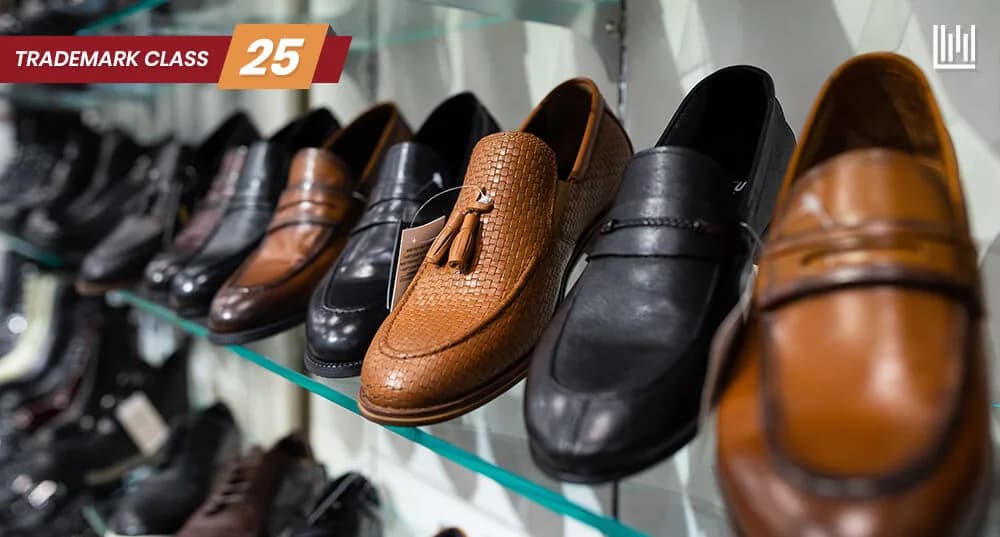
Table of contents10 sections
Selling shirts, sarees, sneakers or caps under your own brand name? Then your trademark goes in Class 25. That’s the short answer.
Class 25 is the Nice Classification class for clothing, footwear and headgear. The official class heading is just those three words. It covers ready-to-wear items you actually put on your body, feet or head. It does not cover the fabric, the bags or the shop.
Filing is online. The government fee is ₹4,500 per class for individuals, startups and MSMEs, and ₹9,000 per class for everyone else. You can start using the ™ symbol the day you file. If you want someone to handle the filing, you can register your trademark with LegalWiz.
What the clothing trademark class covers
Think of Class 25 as everything that is worn and finished. Here is the class 25 trademark list in plain groups:
Clothing: shirts, t-shirts, jeans, trousers, dresses, skirts, jackets, suits, sarees, kurtas, lehengas, dupattas, dhotis
Innerwear and nightwear: vests, briefs, bras, pyjamas, thermals, socks and hosiery
Sports and activewear: tracksuits, jerseys, gym vests, running shorts, yoga pants
Winter and rain wear: sweaters, overcoats, raincoats, mufflers, gloves (the regular kind)
Headgear: caps, hats, turbans, beanies, headbands
Footwear: shoes, sandals, slippers, boots, heels, sneakers, loafers
That last one matters if you are searching for the shoes trademark class. It is the same Class 25. There is no separate class for footwear.
What does not belong in Class 25
This is where most filings go wrong. Things that look like clothing but sit somewhere else:
If you sell | It goes in |
|---|---|
Handbags, wallets, leather goods | Class 18 |
Fabric and textile material | Class 24 |
Buttons, zips, lace, ribbons | Class 26 |
Jewellery and watches | Class 14 |
Safety helmets, fire-resistant suits, protective footwear | Class 9 |
Surgical gowns, orthopaedic shoes | Class 10 |
Your clothing shop or online store (the retail service) | Class 35 |
One thing to notice. If you run an online fashion store under your brand, Class 25 protects the garments, but the selling service sits in Class 35. A lot of fashion brands file in both. Think about it before you file, because adding a class later means a fresh application and a fresh fee.
Not sure where one odd product fits? Run it through the trademark class search tool first. Takes a minute.
What you can actually trademark
Not just the name. In a fashion business, these are worth protecting:
Your brand name
Your logo or monogram
Product line or collection names
Taglines
Label designs and distinctive tag artwork
Big names show how this works. Nike has the Swoosh and “Just Do It”. Adidas has the three stripes. Indian labels like FabIndia, Biba, Liberty and Red Chief all hold marks in this class.
If your logo is the main thing you want to protect, this guide on how to trademark your logo helps.
Class 25 trademark search before you file
Do this first. Skip it and you may pay a government fee for an application that gets objected.
Search the IP India public database for your brand name in Class 25. Check for the exact name, and also for names that sound similar or look similar. Fashion is a crowded class, and the Registry looks at phonetic similarity too, so “Zivaa” can get blocked by “Zivame” even though the spelling is different.
A quick checklist:
Search the exact word
Search spelling variations and phonetic twins
Search related Class 35 and Class 18 marks if you plan to expand
Look at the status: registered, pending, objected or abandoned
How to register a trademark for clothing, footwear or headgear
The steps are the same as for any other trademark. Just keep Class 25 in mind from the start. The full walkthrough is in our guide to the trademark registration process, but here is the short version:
Search your brand in Class 25.
Pick the class and describe your goods properly. Write “men’s shirts, sarees, sports shoes” and not just “clothes”.
File the application online on the IP India portal with your details, logo (if any) and proof of use if you have been using the mark.
Examination. The Registry reviews it and may raise an objection.
Journal publication. The mark is advertised, and anyone can oppose it within four months.
Registration. No objection or opposition left? You get the certificate and can use the ® symbol.
Registration lasts 10 years and can be renewed after that. Total time varies a lot. A clean application moves faster, and one with objections or opposition can run well over a year.
Costs, in plain numbers
Applicant | Government fee (online, per class) |
|---|---|
Individual, startup, MSME | ₹4,500 |
Company, LLP, others | ₹9,000 |
Professional charges are separate, and they depend on who you hire. If you file for Class 25 and Class 35 together, you pay for two classes. The full breakup is in this post on trademark registration fees and costs.
If you get an objection
It happens a lot in apparel because so many brand names sound alike. The Registry can object if your name is too close to an existing mark, or if it describes the product too directly (something like “Cotton Wear” for a cotton brand).
You get 30 days to reply. Miss it and the application can be treated as abandoned.
A properly argued reply with evidence of use often fixes it. LegalWiz handles trademark objection reply filings, and if you want to try writing it yourself, start with this piece on how to reply to a trademark objection.
Why bother registering at all
Because copying is easy in fashion. Someone sees your design on Instagram, prints the same label, and sells it on a marketplace within weeks.
A registered trademark gives you:
Exclusive right to use the brand for your goods across India
A stronger case against copycats and counterfeit sellers
Something to show marketplaces when you report a fake listing
A brand that can be licensed, franchised or sold later
A clean base to expand into new product lines under one name
Unregistered brands are not helpless. But proving your rights without a registration is slow and costly.
Working with LegalWiz.in
We have helped fashion and footwear businesses file in Class 25, from small D2C labels to exporters. One reviewer on Google said LegalWiz.in “took the stress out of trademark filing” and mentioned that the team kept them updated at every step. The site carries a 4.7 out of 5 rating on Google.
What we do for you:
Check Class 25 (and Class 35 or 18, if needed) before filing
Run the search and tell you the real risk, not just “looks fine”
File the application and track it
Handle objections, hearings and renewals
Got a clothing brand, a footwear line or a headgear range? Don’t leave the name unprotected for long. The sooner you file, the earlier your date of application is on record, and that date is what counts if someone else turns up with a similar name.
Frequently asked questions
Can I register my clothing brand and footwear brand under the same application?
Yes, if both product categories fall under Class 25 and are marketed under the same brand, you can register them together.
Are textile materials like fabrics and bed linen included in Class 25?
No. Those fall under the trademark class for textile goods (Class 24), not Class 25.
What about protective clothing or medical wear?
Items like PPE kits, surgical gowns, and medical uniforms are usually classified under the trademark class for medical equipment and supplies (Class 10), depending on their purpose.
How do I check if my product falls under Class 25?
Use our Trademark Class Search Tool to confirm the correct class before filing.
Can I register a trademark before launching the product?
Yes, you can file based on intended use. You'll need to show your bona fide intent to use the mark commercially.
Is my trademark valid across all classes automatically?
No. Trademark protection is limited to the class(es) you’ve registered for. If your product spans categories, register in multiple relevant classes.
What happens if I choose the wrong class?
If you choose the wrong trademark class, your application may still get processed, but your trademark won’t be legally protected for the relevant goods or services. This means others could legally use a similar mark in that correct class, and you wouldn’t have grounds to stop them. Moreover, trademark fees are non-refundable, so you'd have to file a new application in the correct class and pay the fees again.
How long does registering a trademark take?
Trademark registration in India typically takes 6 months to 2 years, depending on any objections or third-party opposition. For a detailed overview of the process, read our complete guide on trademark registration process in India.
How long is my trademark valid, and how often should I renew it?
In India, a registered trademark is valid for 10 years. You must renew it every 10 years—either within 6 months before or after expiry—to maintain your rights.

Written by
Content & Marketing Manager
Ankit Pandya is a marketing and content strategist with 8 years of experience across FMCG, D2C, and B2B. He writes about content strategy, digital marketing, AI-driven growth, and emerging industry trends, combining practical insights with real-world marketing experience.
All articles by Ankit PandyaServices related to this article
Everything here is handled online by our specialists, start to finish.
Comments