
Trademark Class 4: Industrial Oils, Fuels & Illuminants
What lubricants, fuels, wax and candles fall under Class 4, what does not, and how to file without an objection.
Ankit Pandya4 min read
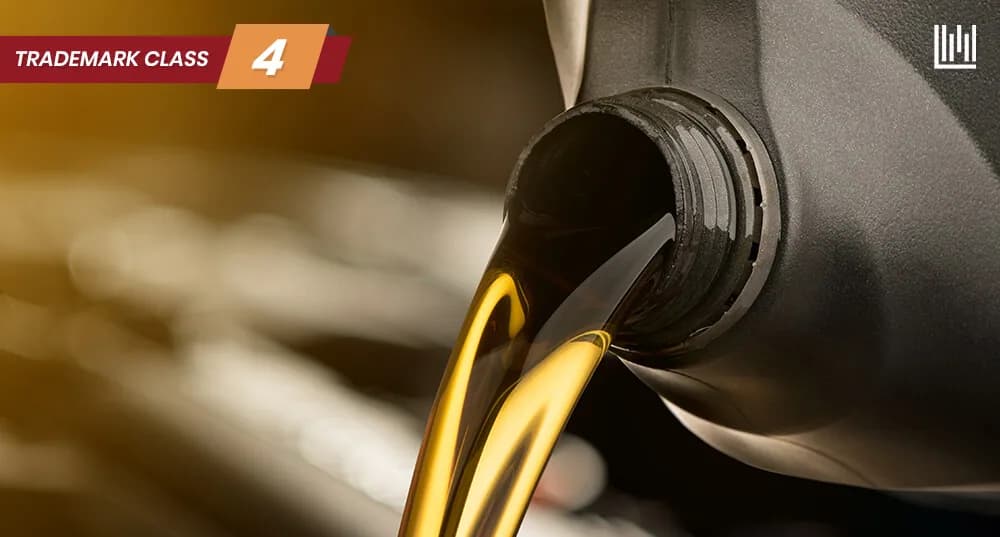
Table of contents9 sections
Class 4 is where oils, fuels and anything burned for light end up. Engine oil, grease, diesel, coal, firewood, paraffin wax, even a scented candle. If that is what you sell, this is your class.
India uses the Nice Classification, 45 classes in all. Goods run from 1 to 34 and services from 35 to 45. Class 4 is a goods class, so if you also run a petrol pump or a fuel delivery business, the service side needs its own class. I will come to that.
Most of the confusion comes from the word "oil", which shows up in half the classes. The thumb rule on calls is simple. If you burn it, if it keeps a machine moving, or if it is wax meant for lighting, it is Class 4. A chemical, a paint, a cosmetic or a medicine is not.
What products come under Class 4?
The official heading is a mouthful: industrial oils and greases, wax; lubricants; dust absorbing, wetting and binding compositions; fuels and illuminants; candles and wicks for lighting. Broken down, it looks like this.
Group | Examples |
Industrial oils and greases | Lubricating oil, lubricating grease, cutting fluids |
Lubricants | Engine oil, gear oil, automotive lubricants |
Wax | Paraffin, beeswax, carnauba wax, industrial wax |
Fuels | Petrol, diesel, kerosene, fuel gas, coal, coke, charcoal, firewood |
Fuel additives | Non-chemical additives for motor fuel |
Illuminants | Candles, tapers, scented candles, lamp wicks, wax for lighting |
Dust compositions | Dust absorbing, dust binding and dust laying preparations |
Energy | Electrical energy |
The Registry's list is long and the exact wording matters, so do not guess. Check your product on our trademark class search tool, or scroll through the full Class 4 list below.
Class 4: Fuels, industrial oils and illuminants
695 goods in this class
| Class | Term |
|---|---|
| Class 4 | Additive concentrates (Non-chemical -) for lubricants |
| Class 4 | Additive concentrates (Non-chemical -) for motor fuels |
| Class 4 | Additives (Non-chemical -) for combustion enhancers |
| Class 4 | Additives (Non-chemical -) for fuels |
| Class 4 | Additives (Non-chemical -) for fuels to prevent combustion chamber deposits |
| Class 4 | Additives (Non-chemical -) for greases |
| Class 4 | Additives (Non-chemical -) for hydraulic fluids |
| Class 4 | Additives (Non-chemical -) for lubricants |
| Class 4 | Additives (Non-chemical -) for oils |
| Class 4 | Additives (Non-chemical -) for petroleum products |
Showing 1 to 10 of 695 entries
What does not belong in Class 4?
Lots of oil-type products get filed here by mistake. You end up with an objection, or a registration that does not cover what you actually sell.
Product | Usual class |
Brake fluid, transmission fluid, chemical additives | Class 1 |
Paints and varnishes | Class 2 |
Hair oil, body oil, essential oils | Class 3 |
Medicated and massage oils | Class 5 |
Oil filters, fuel pumps | Class 7 |
Lamps, lanterns, stoves, heaters | Class 11 |
Edible oils | Class 29 |
Retail of fuel or lubricants, dealerships | Class 35 |
Fuel transport and delivery | Class 39 |
Brake fluid and transmission fluid catch people out all the time. They look like oils, but the Registry usually treats them as chemical products. Have a look at Class 1 chemical goods before you decide.
Hair oil, body oil, essential oils? Cosmetics. That is Class 3, even if the bottle looks like a lubricant.
A lantern is Class 11, but the oil or wax you burn inside it is Class 4. The Class 11 lighting and heating goods guide covers the lamp side.
What should an oil or fuel brand actually trademark?
Brand name, product names, logo, tagline. That is the usual set.
The company name needs a note. Registering with MCA does not stop anyone using the same name as a brand. If your company name is what customers read on the drum or pack, file it as a trademark too.
And check availability properly. Names like Servo, Veedol and MAK are already out there, and you will see that kind of name in your search report.
How to file a Class 4 trademark application
Search first. Look for similar marks in Class 4 and nearby classes.
Write the goods properly. "Lubricating oils for automobiles" is better than "oils".
File Form TM-A online. You can file your trademark application online in your own name or your company's.
Pay the fee per class. Rs 4,500 for individuals, startups and small enterprises, Rs 9,000 for everyone else, on e-filing.
Wait for examination. If the Registry raises an objection, you get one month to reply.
Publication. The mark goes into the Trade Marks Journal and stays open to opposition for four months.
Registration. Protection runs for 10 years, then renewal.
Overall, expect 12 to 18 months if nothing goes wrong. An objection or opposition adds more. Registry speed changes, so take it as a range.
Wondering what two or three classes will cost? Our note on trademark registration fees and costs has the break-up.
Got an examination report? Do not sit on it. Read how to reply to a trademark objection before the one month runs out.
If someone opposes your mark, you have two months to file a counter-statement. Our team handles trademark opposition matters from start to finish.
Mistakes we see in Class 4 filings
Describing goods as just "oils". The Registry will ask what kind, and you lose weeks.
Filing only the logo. The word mark stays open for a copycat.
Ignoring Class 35 when you run outlets, distributors or a dealership network.
Assuming a big brand's name is free because it "belongs" to another class. Similar goods in nearby classes can still be cited against you.
Using the mark on drums and invoices for years before filing anything.
Choosing classes when your range is mixed
Say a cutting-oil maker also sells industrial grease and wax. That is all Class 4, so one class and one fee. Now the same maker adds a hair oil line and a coolant. That is Class 3 and Class 1, so two more fees. Most people only discover this after filing.
If you are weighing this, read how to choose the right trademark class before you file.
Ready to file?
Vishvam PG (June 2026) told us, "Had a great experience with LegalWiz for my trademark registration."
If you want us to check your goods wording and file, start your trademark registration with LegalWiz. This is general information and not legal advice. LegalWiz is a facilitation platform, not a law firm.
10,000+ Brands Trust LegalWiz.in for Trademark Protection
At LegalWiz.in, we’ve helped thousands of businesses—both startups and established companies—register and safeguard their intellectual property. From industrial oils and lubricants to fuels and energy products, we ensure your trademarks are protected comprehensively.
Whether you’re launching a new product line or expanding into new markets, our experienced team makes trademark registration seamless, efficient, and legally sound.
Frequently asked questions
Are automotive oils and greases included in Class 4?
Yes, engine oils, brake fluids, transmission oils, and greases for automotive use fall under Class 4.
What is the difference between Class 4 and Class 3?
Class 4 covers industrial and automotive oils and fuels, while Class 3 includes cosmetic and personal care oils and cleaning products.
Can I register a trademark for lubricants and machinery parts together?
Lubricants fall under Class 4, but machinery parts like oil filters or pumps are under Class 7. Separate registrations are required.
How long does the trademark registration process take?
Trademark registration in India typically takes 6 months to 2 years, depending on any objections or third-party opposition. For a detailed overview of the process, read our complete guide on trademark registration process in India.
How long is a trademark valid?
In India, a registered trademark is valid for 10 years. You must renew it every 10 years—either within 6 months before or after expiry—to maintain your rights.
What happens if I file in the wrong class?
If you choose the wrong trademark class, your application may still get processed, but your trademark won’t be legally protected for the relevant goods or services. This means others could legally use a similar mark in that correct class, and you wouldn’t have grounds to stop them. Moreover, trademark fees are non-refundable, so you'd have to file a new application in the correct class and pay the fees again.
Can I file a trademark application before launching the product?
Yes, you can file based on intended use. You'll need to show your bona fide intent to use the mark commercially.

Written by
Content & Marketing Manager
Ankit Pandya is a marketing and content strategist with 8 years of experience across FMCG, D2C, and B2B. He writes about content strategy, digital marketing, AI-driven growth, and emerging industry trends, combining practical insights with real-world marketing experience.
All articles by Ankit PandyaServices related to this article
Everything here is handled online by our specialists, start to finish.
Comments