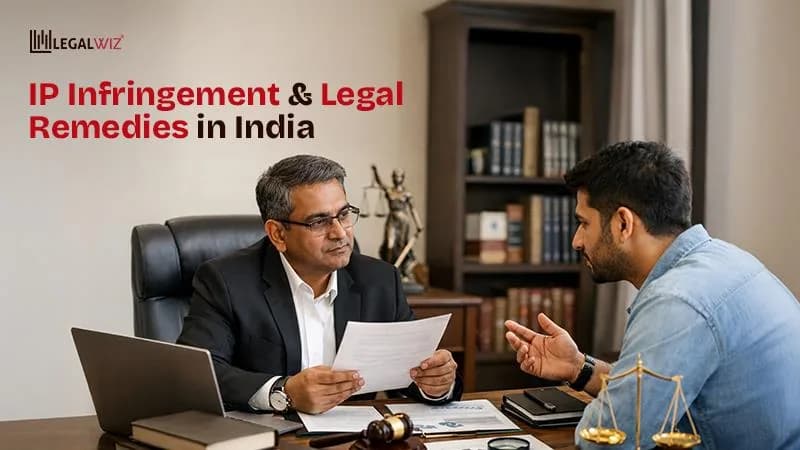
Intellectual Properties
IP Infringement and Legal Remedies in India
Intellectual property is more than a legal concept. It is business asset that carries real value.
5 min read

A patent goes to whoever files first, not to whoever invents first. A provisional application locks in your priority date now, and gives you twelve months to finish the invention before the complete specification is due.
A few details, then secure checkout. Your expert takes it from there.
Starting at₹13,600+ Govt. Fees
Prefer to talk to someone first?
What a provisional application does, what it does not do, and why inventors choose LegalWiz.in to file one.
A patent is an exclusive legal right that lets the patentee stop other people making or using the patented invention. A provisional application is the preliminary step towards one: a brief synopsis disclosing the essence and the nature of the invention, filed before the complete specification is ready.
It explains the invention in brief rather than completely, and that is the point. It locks the priority date and secures the invention, so that nobody else can claim authority over it while you finish the work.
The twelve months that follow are the other half of the product. Use them to refine the utility, the novelty and the inventive step, and to judge whether the invention is worth the cost of a complete patent. If you decide it is not, nothing is charged, nothing is published, and the invention never enters the public domain.
Everything below is handled by your relationship manager and a patent professional. You describe the invention once, and approve the draft before it is filed.
Government fees are charged at actuals and are paid when the application is submitted. Additional fees apply where the provisional draft runs beyond 30 pages.
A scientific theory or a mathematical method cannot be patented.
An aesthetic creation, or a literary, dramatic or artistic work, or a computer programme. Copyright is the right that covers those.
A scheme or method for performing a mental act, with no practical use, is not patentable.
Filing a provisional application secures a priority date for the patent, which stops anyone else filing a similar one ahead of you while your invention is still being finished.
You get twelve months to work on the invention and improve its utility, novelty and inventive step until it meets the standard, before the final draft, the complete specification, is due.
A provisional filing is the simpler and cheaper step towards protection. Those twelve months are time to judge whether the invention has the potential to be patented. Changing your mind inside them attracts no charge, and the application is never published.
Managed well, a patent can produce far greater returns than any other intellectual property. The owner can license, assign or sell it, which is how pharmaceutical companies have long made money from patented products.
A provisional patent is a first step, not a destination. Here is how it sits against the right it leads to, and against the two that protect different things entirely.
| Attribute | Provisional Patent | Trademark | Permanent Patent | Copyright |
|---|---|---|---|---|
| What it covers | ||||
| InventionsA new invention idea, with a prototype | Brand name and logoA logo, a design, packaging material, or the name of a business or company | InventionsA new invention idea, with a prototype | Artistic worksAll types of original artistic, dramatic or musical work | |
| Governing Act | The Patents Act, 1970 | Trade Marks Act, 1999 | The Patents Act, 1970 | The Copyright Act, 1957 |
| How you get it | ||||
| MandatoryThere is no unregistered equivalent | MandatoryRequired to claim an exclusive right over the mark | MandatoryThere is no unregistered equivalent | OptionalCopyright arises on creation, but registration is what lets you sue | |
| NoIt is the provisional application itself | NoDoes not require any provisional application | OptionalA complete specification can be filed directly, or within 12 months of a provisional application | NoDoes not require any provisional application | |
| What it gives you | ||||
| NoThere is no symbol for a patent | Yes™ once the application is filed, ® once registered | NoThere is no symbol for a patent | Yes© | |
| 12 monthsThe complete specification must be filed inside that year, or it lapses | 10 yearsRenewable every 10 years, with no limit on the number of renewals | 20 yearsFrom the date of application, including the year of the provisional filing | Lifetime, plus 60 yearsThe creator’s lifetime, and 60 years after their death | |
| Next step | Get started | Know more | Know more | Know more |
Swipe the table sideways, Provisional Patent stays in view. Open any attribute to read the detail behind all 4 answers.

Had a great experience with LegalWiz for my trademark registration. The service was smooth, and the after sales support was excellent. Although the filing took around 3 days, the team stayed connected throughout, provided clear updates, and there were no communication issues. Overall, a very professional and reliable experience.
Had a wonderful experience. The team was very supportive, responsive and completed everything on time. Thank you for the excellent support.
Jignesh was very helpful and amazing while filling the compliance form for my business. Will take your service again.
Good support team. No hindrance in executions. Go for it.
JIGNESH BHAI, I wanted to take some time to sincerely thank you for your incredible support with my MSME registration through LegalWiz. From start to finish, Jignesh Bhai, your guidance, patience, and professionalism made what could have been a stressful and confusing process feel completely smooth and manageable. You took the time to explain every step clearly, answered all my questions patiently, and ensured that nothing was left uncertain. Your attention to detail and dedication truly stood out, and it gave me a lot of confidence throughout the process. I really appreciate the effort, care, and commitment you put into helping me. Jignesh Bhai, your service has been exceptional, and I couldn’t have asked for a better experience. Heartfelt thanks once again!
Highly recommend services from Legalwiz. Got my LLP conversion process faster. Helpful staff.
Limited Liability PartnershipHad a great experience working with the team! They handled my LLP registration smoothly, guided me clearly through every step, and were always quick to respond. Really appreciate their professionalism and support. Highly recommended!
They are so quick and highly professional and experienced in the industry to carry out the requirement. Loved their services.

Trademark RegistrationVery fast & timely service. The team was very helpful and helped me find out if the brand name was available or not over the call itself without any extra cost or charge. Brilliant service, very clear communication, timely delivery & transperant pricing. Cheers!
Trademark RegistrationSatisfied with your unit service and fee grateful to connect with you service providers staff thanks regards Shivlal
File INC-20AI am very much satisfied with their service for INC 20 A. i will recommend them and definitely will keep in mind for any other service.
Close a Private Limited Companyexcellent, i appreciate accountability and transparency in the process
Private Limited CompanyLegalwiz is doing its best to give good service to clients.
Trademark RegistrationRecently got Trade Mark registered
Trademark RegistrationIt was an amazing experience from the support team. Thank you...
GST RegistrationHad a Seamless Experience in registering for GST. Been associated with them for 5 yrs now, and have done several LLP and GST registrations. Happy with their service, so i keep coming back.
Four things, and the third is the one that matters most. Take advice before disclosing an invention to anyone.
The title of the invention.
The name, address and nationality of each applicant for the patent.
A detailed description of the invention, and of what the patentee wants to claim out of it.
The technical details of the invention, with drawings.
Step 01
Step 02
Step 03
Subject to government processing time.
Fifteen working days from your brief to a filed application.
2 of 15 working days
11 of 15 working days
2 of 15 working days
Subject to government processing time. The complete specification is due within 12 months of the filing date.
Leverage best deals offered by the industry leaders and experience mutual growth.







Still have a question? Our team is happy to help, at no charge and with no obligation to buy anything.
Because it registers your name against the invention before the invention is finished. A patent is awarded to the person who files first, not to the person who invented first.
A provisional application can be filed while the invention is still at a conceptual stage, which is exactly when the risk of somebody else filing is highest.
One year from the date of filing.
If the complete specification is not filed within that year, the application is abandoned and the priority date is lost.
A provisional patent is temporary. It is applied for when the invention is not finalised and is still in the experimental phase.
An application for a permanent patent is made when the invention is finished and ready to be patented, and it runs for 20 years.
Patent filing is what gives you exclusive rights over the invention. Without protection under the law, anyone can exploit it commercially once it becomes public.
To stop others using, selling or copying it, the inventor has to obtain a patent.
An invention needs three qualities to be patentable:
No. Once an invention is in the public domain it can no longer be patented.
Inventors should not disclose an invention before the patent application is filed. That is the single most common way a patentable invention stops being patentable.
The history of the invention, any prototypes, and every minor detail. That is what allows the inventive steps to be stated clearly and the claims to be drafted well.
The draft should also carry the most useful aspect of the invention, with technical drawings illustrating how it works, and should say whether it is a developed or improved version of an existing patent.
There is no restriction as such.
Additional fees are stipulated where the provisional application draft runs beyond 30 pages.
No. The professional fee covers the drafting and the filing work.
Government fees for filing the provisional application or the complete specification are paid by the client when the application is submitted.
In one of four ways:
No. A patent filed and registered in India is valid only in India, and no patent is global.
Protection elsewhere needs a separate application in each country, or a filing through the Patent Cooperation Treaty.
Twenty years from the date of application.
Intellectual property is more than a legal concept. It is business asset that carries real value.
5 min read
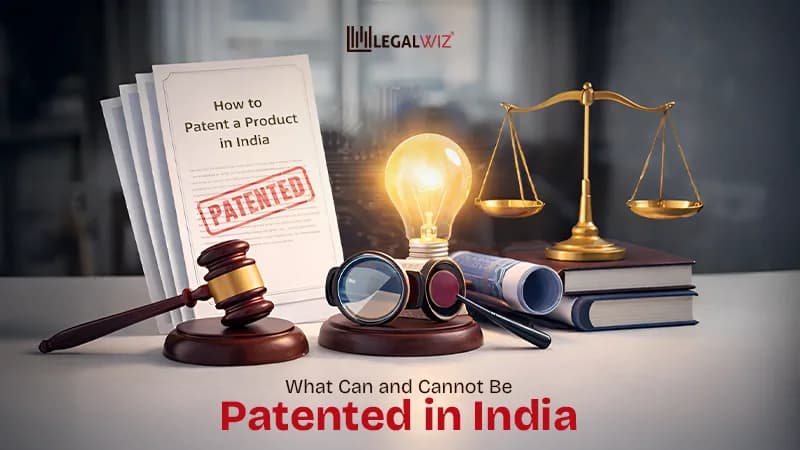
Patent registration is not just about having a new idea.
5 min read
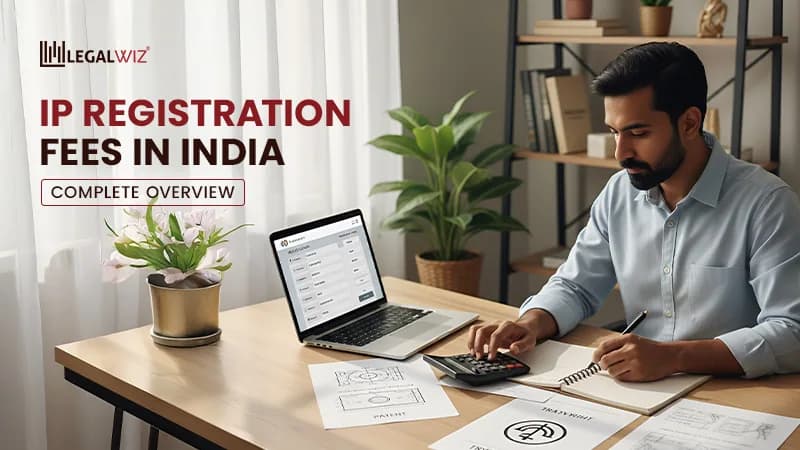
Legal protection does not move on its own. For founders, creators, and businesses, the first question is rarely legal theory.
4 min read
File a provisional application before somebody else files for the same idea.
Get started