Legal Documents & Contracts
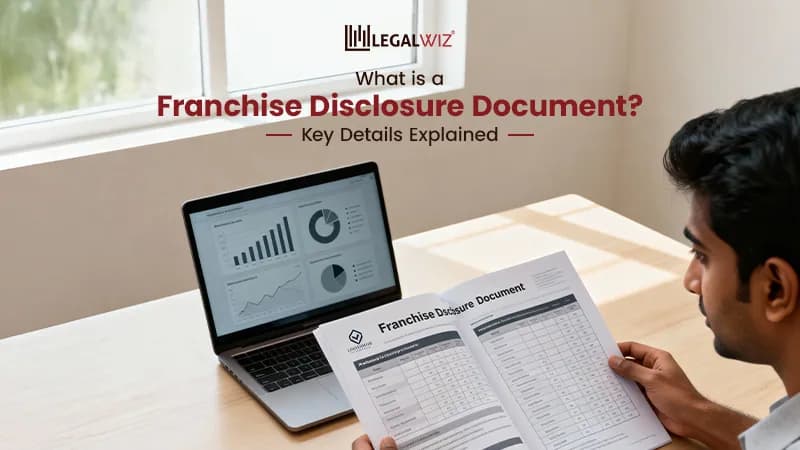
What is a Franchise Disclosure Document? Key Details Explained
Franchising is often seen as an easier way to start a business. But it still comes with serious legal and financial responsibility.
4 min read

The only legal document between an employer and an employee, and the one that decides what either can insist on. From the most junior hire to the CEO, everyone is an employee.
A few details, then secure checkout. Your expert takes it from there.
Prefer to talk to someone first?
The sole legal document between employer and employee, setting out what each owes the other for as long as the employment lasts.
An employment agreement lays out the rights, duties and obligations of both parties during the employment period. It is a crucial document in managing people, because it is the only place those obligations exist in a form either side can point at. From the most junior level to the chief executive, everyone is an employee, and managing employees efficiently means having one.
Where an individual is hired on a contractual basis for a limited period, someone brought in for a specific project, a service agreement is drafted instead. That is a different document governing a different relationship, and using an employment agreement for a contractor is one of the commonest drafting errors there is.
"Employment agreement" and "employment contract" are two names for the same document. Nothing about the law or the drafting differs between them.
The elements every employment agreement should define.
Anything else the employer needs can be added. The seven above are the ones that cause a problem when they are missing.
The Indian Contract Act does not mention employment agreements as such. They are ordinary contracts, and they succeed or fail on ordinary contract principles.
An agreement that restrains someone from carrying on a lawful profession, trade or business is void to the extent of the restraint. A restriction has to be reasonable to be permitted at all, which is why non-compete clauses are drafted narrowly.
Leave, maternity leave, working hours and the rest are governed by the Shops and Establishments Act of the state the establishment sits in, not by the agreement.
The Factories Act 1948, the Maternity Benefit Act 1961 and the Payment of Gratuity Act 1972 among them. An agreement cannot contract out of any of them.
Remuneration, working hours, job description, duties and obligations, stated in one place. An employee wanting to be clear about their compensation is only possible where there is a well-drafted agreement to be clear from.
The agreement may name how disputes are resolved. Arbitration is a common choice and is preferred to lengthy litigation, but only if it was agreed in advance.
A confidentiality clause stops an employee disclosing what they were exposed to during the employment. An IP clause records that what they built during it belongs to the employer.
Non-compete and non-solicitation clauses stop a departing employee joining a competitor on the same idea or taking colleagues, clients and distributors with them, provided the restraint is reasonable.
Four documents, four moments in a hire. This is the one that carries the terms; the other three announce, confirm and close the employment.
| Attribute | Employment agreement | Offer letter | Appointment letter | Relieving letter |
|---|---|---|---|---|
| Where it falls in the hiring | ||||
| On joiningSigned on or around the joining date, with the rest of the HR formalities, before the employee is assigned any work. | After selectionOnce the candidate has cleared every round and the employer has decided to hire them, but before anything has been accepted. | After acceptanceAfter the offer has been accepted. It is usually handed over on the first day of joining. | On the last dayAfter the resignation has been accepted and the notice period has been served, on the final day of the employment. | |
| The employerPrepared by the employer and executed by both parties. | The employerUsually the HR function, on the letterhead. | The employerDrafted on the company letterhead and authorised by the HR manager or employer. | The employerOn the company letterhead, signed and authorised by the employer. | |
| BothIt is a contract, so both parties execute it. | Both, to acceptThe candidate signs to accept. Until then it binds nobody, and either side may withdraw. | BothThe employee signs a copy and returns it to the employer, which is what records that the terms were received. | The employer onlyIt is a confirmation issued to the employee rather than an agreement with them. | |
| What is in it | ||||
| The full termsRoles and duties, remuneration, probation, confidentiality, intellectual property, non-compete and how either side may end the engagement. | The offerDesignation, remuneration, reporting manager, joining date, paid leave, and the documents to be produced on joining. | The appointmentThe position, the salary and benefits, the company policies that apply, and the other terms of the employment. | That you have leftThat the resignation was accepted and the employee has been relieved of their duties and responsibilities. | |
| YesA legally binding agreement, enforceable in a court, and either party may seek a remedy for a breach of it. | Not until acceptedThe company may withdraw it at any point before acceptance, on reasonable grounds, and the candidate may decline it. | Part of the termsIt records the terms of the employment and is relied on as evidence of them. For a smaller employer it is often the only written terms there are. | NoA confirmation of a fact. It creates no obligation on either side. | |
| RarelyIt is usually confidential and is not normally shown to a subsequent employer, though its notice period governs when the employee may leave. | RarelyIt is superseded by the appointment letter. | SometimesAsked for as proof of the designation and the terms held at the previous employer. | UsuallyCommonly asked for at the point of joining, as proof that the previous employment was ended properly and no notice period is outstanding. | |
| Next step | Get started | Know more | Know more | Know more |
Swipe the table sideways, Employment agreement stays in view. Open any attribute to read the detail behind all 4 answers.

Had a great experience with LegalWiz for my trademark registration. The service was smooth, and the after sales support was excellent. Although the filing took around 3 days, the team stayed connected throughout, provided clear updates, and there were no communication issues. Overall, a very professional and reliable experience.
Had a wonderful experience. The team was very supportive, responsive and completed everything on time. Thank you for the excellent support.
Jignesh was very helpful and amazing while filling the compliance form for my business. Will take your service again.
Good support team. No hindrance in executions. Go for it.
JIGNESH BHAI, I wanted to take some time to sincerely thank you for your incredible support with my MSME registration through LegalWiz. From start to finish, Jignesh Bhai, your guidance, patience, and professionalism made what could have been a stressful and confusing process feel completely smooth and manageable. You took the time to explain every step clearly, answered all my questions patiently, and ensured that nothing was left uncertain. Your attention to detail and dedication truly stood out, and it gave me a lot of confidence throughout the process. I really appreciate the effort, care, and commitment you put into helping me. Jignesh Bhai, your service has been exceptional, and I couldn’t have asked for a better experience. Heartfelt thanks once again!
Highly recommend services from Legalwiz. Got my LLP conversion process faster. Helpful staff.
Limited Liability PartnershipHad a great experience working with the team! They handled my LLP registration smoothly, guided me clearly through every step, and were always quick to respond. Really appreciate their professionalism and support. Highly recommended!
They are so quick and highly professional and experienced in the industry to carry out the requirement. Loved their services.

Trademark RegistrationVery fast & timely service. The team was very helpful and helped me find out if the brand name was available or not over the call itself without any extra cost or charge. Brilliant service, very clear communication, timely delivery & transperant pricing. Cheers!
Trademark RegistrationSatisfied with your unit service and fee grateful to connect with you service providers staff thanks regards Shivlal
File INC-20AI am very much satisfied with their service for INC 20 A. i will recommend them and definitely will keep in mind for any other service.
Close a Private Limited Companyexcellent, i appreciate accountability and transparency in the process
Private Limited CompanyLegalwiz is doing its best to give good service to clients.
Trademark RegistrationRecently got Trade Mark registered
Trademark RegistrationIt was an amazing experience from the support team. Thank you...
GST RegistrationHad a Seamless Experience in registering for GST. Been associated with them for 5 yrs now, and have done several LLP and GST registrations. Happy with their service, so i keep coming back.
Three working days from the questionnaire to the first draft in your inbox.
Step 01
Step 02
Step 03
Three working days, subject to government processing time where any applies.
Leverage best deals offered by the industry leaders and experience mutual growth.












Still have a question? Our team is happy to help, at no charge and with no obligation to buy anything.
Yes, and binding, where the restrictions it places on the employee are reasonable. Unreasonable clauses and restrictive covenants render that portion of the agreement invalid, not the whole document, only the part that goes too far.
No. It does not have to be notarised by a public notary, but stamp duty has to be paid on it. The rate is in the schedule to the applicable Stamp Act and differs from state to state.
A contractor is hired for fixed-term projects and the relationship is governed by a service agreement. An employee is hired full time and the relationship is governed by an employment agreement.
A contractor is paid fees against invoices they raise; an employee is paid a fixed salary. Getting this wrong means using the wrong document for the relationship you actually have.
Yes. An employer has the right to the employee’s services on an exclusive basis, and the agreement can state clearly that the employee may not provide services to anyone else while it continues.
A restraint that extends beyond the end of the employment is a different question, and is where section 27 of the Contract Act starts to bite.
The first draft is with you in three working days from the questionnaire being completed. Two rounds of amendments after that are included in the original charges.
Franchising is often seen as an easier way to start a business. But it still comes with serious legal and financial responsibility.
4 min read
Most startups begin with trust, shared ambition, and the energy of building something new.
6 min read
In today’s rapidly evolving business environment, companies face numerous challenges in managing their workforce.
6 min read
A 100% online process, and the first draft with you in three working days.
Get started