Manage your business
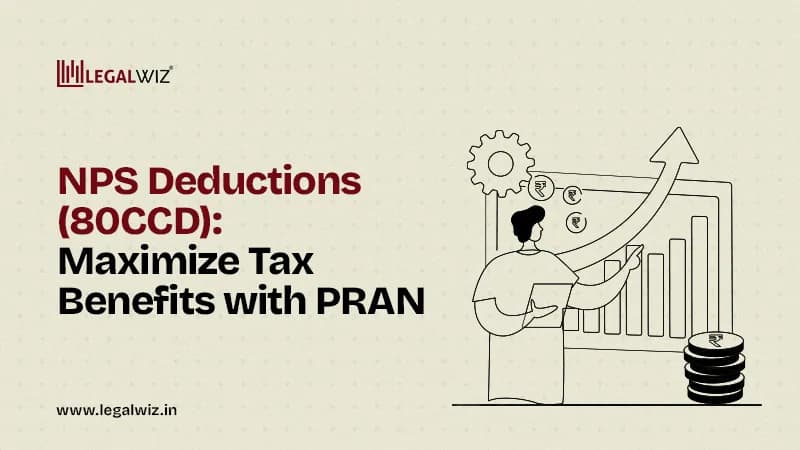
NPS Deductions (80CCD): Maximize Tax Benefits with PRAN
Retirement might feel like a distant galaxy, but your tax-saving strategy doesn’t have to travel that far!
6 min read

The Act that obliges a public authority to answer a citizen’s question within thirty days. Most applications fail on how the question was asked, not on what was asked.
A few details, then your expert calls you. Nothing to pay at this step.
Prefer to talk to someone first?
A citizen’s statutory right to ask a public authority for information, and that authority’s duty to answer.
The Right to Information Act, 2005 mandates a timely response to citizens’ requests for government information. Under the Act, any citizen may request information from a public authority, whether a body of government or an instrumentality of the state, which is required to reply expeditiously, and in any case within thirty days.
To file one, an application is made stating the department the information is wanted from and describing what is being asked for. It carries the applicant’s details, is submitted to the Public Information Officer with the prescribed fee, and can be filed online.
The Act carries a list of exemptions, and one of them changed significantly in 2023: the Digital Personal Data Protection Act amended section 8(1)(j) so that personal information is now exempt outright, where previously it could be disclosed if there was a larger public interest in doing so. Anyone drafting an application that touches a named individual should know that before filing rather than after.
Sent to a department that does not hold the record, the application is transferred or simply refused. Identifying the right authority is half the work.
The Act obliges a public authority to give INFORMATION it holds. "Why was this decided?" invites a refusal; "provide copies of the file notings relating to this decision" does not.
Personal information, national security, commercial confidence and a handful of others. Since 2023 the personal information exemption is the widest of them.
A refusal or a silence is the start of the process, not the end of it. There is a first appeal within the authority and a second to the Information Commission.

Had a great experience with LegalWiz for my trademark registration. The service was smooth, and the after sales support was excellent. Although the filing took around 3 days, the team stayed connected throughout, provided clear updates, and there were no communication issues. Overall, a very professional and reliable experience.
Had a wonderful experience. The team was very supportive, responsive and completed everything on time. Thank you for the excellent support.
Jignesh was very helpful and amazing while filling the compliance form for my business. Will take your service again.
Good support team. No hindrance in executions. Go for it.
JIGNESH BHAI, I wanted to take some time to sincerely thank you for your incredible support with my MSME registration through LegalWiz. From start to finish, Jignesh Bhai, your guidance, patience, and professionalism made what could have been a stressful and confusing process feel completely smooth and manageable. You took the time to explain every step clearly, answered all my questions patiently, and ensured that nothing was left uncertain. Your attention to detail and dedication truly stood out, and it gave me a lot of confidence throughout the process. I really appreciate the effort, care, and commitment you put into helping me. Jignesh Bhai, your service has been exceptional, and I couldn’t have asked for a better experience. Heartfelt thanks once again!
Highly recommend services from Legalwiz. Got my LLP conversion process faster. Helpful staff.
Limited Liability PartnershipHad a great experience working with the team! They handled my LLP registration smoothly, guided me clearly through every step, and were always quick to respond. Really appreciate their professionalism and support. Highly recommended!
They are so quick and highly professional and experienced in the industry to carry out the requirement. Loved their services.

Trademark RegistrationVery fast & timely service. The team was very helpful and helped me find out if the brand name was available or not over the call itself without any extra cost or charge. Brilliant service, very clear communication, timely delivery & transperant pricing. Cheers!
Trademark RegistrationSatisfied with your unit service and fee grateful to connect with you service providers staff thanks regards Shivlal
File INC-20AI am very much satisfied with their service for INC 20 A. i will recommend them and definitely will keep in mind for any other service.
Close a Private Limited Companyexcellent, i appreciate accountability and transparency in the process
Private Limited CompanyLegalwiz is doing its best to give good service to clients.
Trademark RegistrationRecently got Trade Mark registered
Trademark RegistrationIt was an amazing experience from the support team. Thank you...
GST RegistrationHad a Seamless Experience in registering for GST. Been associated with them for 5 yrs now, and have done several LLP and GST registrations. Happy with their service, so i keep coming back.
Leverage best deals offered by the industry leaders and experience mutual growth.








Still have a question? Our team is happy to help, at no charge and with no obligation to buy anything.
Any citizen of India. It is a right that belongs to citizens rather than to residents or to companies, though a citizen may of course ask about a matter affecting their business.
No. An applicant is not required to give reasons for the request, and a PIO may not demand them as a condition of answering.
Thirty days, and expeditiously where it can. Where the information concerns the life or liberty of a person the period is much shorter.
You appeal. A first appeal goes to the appellate authority within the same public body; a second appeal goes to the State or Central Information Commission.
A refusal has to state the ground it is refused on, which is what the appeal then answers.
Yes, in one way that matters for drafting. The Digital Personal Data Protection Act, 2023 amended the personal information exemption in section 8(1)(j): personal information is now exempt, where previously it could be disclosed where a larger public interest justified it.
An application touching a named individual should be framed with that in mind.
Retirement might feel like a distant galaxy, but your tax-saving strategy doesn’t have to travel that far!
6 min read

A power of attorney is widely used in both personal and business transactions to authorise another person to act legally on one’s behalf.
3 min read
Addressed to the right authority, and asked in a way that has to be answered.
Get started