
Starting a Business
Tatkal FSSAI Registration: Eligibility, Fees and Step-by-Step Process (2026)
Who can get an instant FSSAI licence on FoSCoS, what it costs, and the catch most people miss
5 min read

Every food business in India needs an FSSAI registration or licence, cloud kitchens included. Which of the three you need comes down to your turnover and whether you export.
A few details, then secure checkout. Your expert takes it from there.
Starting at₹2,899+ Govt. Fees
Prefer to talk to someone first?
What the authority does, who has to register with it, and how long the certificate lasts.
FSSAI is the Food Safety and Standards Authority of India, an independent body under the Ministry of Health and Family Welfare. It sets the standards for food in India and regulates how food is manufactured, stored and handled by food business operators.
What you get is a 14 digit licence number, which has to be printed on all your food products alongside the FSSAI logo. It can be applied for from one year up to five at a time, and renewed or re-applied for under the Food Safety and Standards Act, 2006.
Everyone starting a food business needs it, including a cloud kitchen selling only through Swiggy or Zomato. The part that is not obvious is which of the three you need: Basic Registration, a State licence or a Central licence. That is decided by turnover, and by one other thing. Any export at all, however small, puts you on the Central licence regardless of size.
The application itself is short. Choosing the right category, and following it up, is the work.
One licence covers one premises, and every kind of food activity carried on at that premises can go on a single licence. A second premises needs its own.
A blueprint of the premises. Required for a State and a Central licence, and not for Basic Registration.
A licence is applied for in Form B. Basic Registration uses Form A.
ID proof, address proof, the food safety management plan, the declaration, the authority letter, proof of possession, the property tax bill and the product list are common to all three.
The logo and number on a pack tell a customer the food inside was made to the hygiene standards the authority sets. With the range of products on a shelf, that mark is most of what a buyer has to go on.
A licence is compulsory for every food business. Operating without one leaves you exposed to penalties that holding the right registration simply removes, and it is an advantage over a competitor trading without one.
A pack carrying the FSSAI mark reads as a business that has been checked, which spreads by itself and is what a retailer or an aggregator looks for before taking a product on.
Turnover decides it in most cases. Export decides it in every case: any export at all puts you on the Central licence whatever your turnover is.
| Attribute | Basic Registration | State Licence | Central Licence |
|---|---|---|---|
| Which one applies to you | |||
| Under ₹12 lakhAnnual turnover below ₹12 lakh. Mostly hawkers, petty retailers and temporary stall holders, and it is the usual answer for a small online food trader. | ₹12 lakh to ₹20 croreAnnual turnover above ₹12 lakh and up to ₹20 crore. | Over ₹20 croreAnnual turnover of ₹20 crore and above. | |
| Not enoughTurnover does not decide it once there is an export. A business below ₹12 lakh that exports needs the Central licence. | Not enoughThe same applies here. Even a very small consignment going outside India takes the business to the Central licence. | RequiredA Central licence is mandatory for both export and import of food products, whatever the size of the business. | |
| Per premisesEach premises registers separately in the state it sits in. | Per premisesEach unit takes its own State licence in the state it operates in, based on that unit’s own turnover or capacity. | For the head officeA business operating in two or more states takes a Central licence for its registered or head office, in addition to a licence or registration for each individual unit. | |
| What the application needs | |||
| Form ACompleted and signed, submitted through the FoSCoS portal. | Form BCompleted and signed, submitted through the FoSCoS portal. | Form BCompleted and signed, submitted through the FoSCoS portal. | |
| Not requiredNo blueprint of the premises is asked for. | RequiredA blueprint of the area has to go in with the application. | RequiredA blueprint of the area has to go in with the application. | |
| State authorityThe licensing authority for the state the premises is in. | State authorityThe licensing authority for the state the unit operates in. | Central authorityFSSAI’s central licensing authority. | |
| What you owe afterwards | |||
| Not requiredThe annual return applies to manufacturers and importers holding a licence. | If you manufacture or importForm D1 by 31 May each year, for a licensee who manufactures, repacks or imports. A manufacturer of milk and milk products files Form D2 half-yearly instead, within a month of the half-year ending. | If you manufacture or importForm D1 by 31 May each year. A merchant exporter can file a quarterly report online. | |
| Next step | |||
Swipe the table sideways. Open any attribute to read the detail behind all 3 answers.

Had a great experience with LegalWiz for my trademark registration. The service was smooth, and the after sales support was excellent. Although the filing took around 3 days, the team stayed connected throughout, provided clear updates, and there were no communication issues. Overall, a very professional and reliable experience.
Had a wonderful experience. The team was very supportive, responsive and completed everything on time. Thank you for the excellent support.
Jignesh was very helpful and amazing while filling the compliance form for my business. Will take your service again.
Good support team. No hindrance in executions. Go for it.
JIGNESH BHAI, I wanted to take some time to sincerely thank you for your incredible support with my MSME registration through LegalWiz. From start to finish, Jignesh Bhai, your guidance, patience, and professionalism made what could have been a stressful and confusing process feel completely smooth and manageable. You took the time to explain every step clearly, answered all my questions patiently, and ensured that nothing was left uncertain. Your attention to detail and dedication truly stood out, and it gave me a lot of confidence throughout the process. I really appreciate the effort, care, and commitment you put into helping me. Jignesh Bhai, your service has been exceptional, and I couldn’t have asked for a better experience. Heartfelt thanks once again!
Highly recommend services from Legalwiz. Got my LLP conversion process faster. Helpful staff.
Limited Liability PartnershipHad a great experience working with the team! They handled my LLP registration smoothly, guided me clearly through every step, and were always quick to respond. Really appreciate their professionalism and support. Highly recommended!
They are so quick and highly professional and experienced in the industry to carry out the requirement. Loved their services.

Trademark RegistrationVery fast & timely service. The team was very helpful and helped me find out if the brand name was available or not over the call itself without any extra cost or charge. Brilliant service, very clear communication, timely delivery & transperant pricing. Cheers!
Trademark RegistrationSatisfied with your unit service and fee grateful to connect with you service providers staff thanks regards Shivlal
File INC-20AI am very much satisfied with their service for INC 20 A. i will recommend them and definitely will keep in mind for any other service.
Close a Private Limited Companyexcellent, i appreciate accountability and transparency in the process
Private Limited CompanyLegalwiz is doing its best to give good service to clients.
Trademark RegistrationRecently got Trade Mark registered
Trademark RegistrationIt was an amazing experience from the support team. Thank you...
GST RegistrationHad a Seamless Experience in registering for GST. Been associated with them for 5 yrs now, and have done several LLP and GST registrations. Happy with their service, so i keep coming back.
This is the common checklist. A State or Central licence adds two items, which the panel above sets out.
Of the proprietor, partners or directors.
Of the applicant.
The document establishing your right to occupy the place of business.
For the premises the food business operates from.
The plan setting out how food is handled and kept safe at the premises.
The list of products the business will deal in, which is what decides the food categories on the licence.
The declaration prescribed for the application.
Authorising the person making the application on behalf of the business.
Step 01
Step 02
Step 03
Subject to government processing time.
About a week of work on our side for a Basic Registration. A State or Central licence takes longer, as the note below explains.
2 of 10 working days
2 of 10 working days
1 of 10 working days
5 of 10 working days
Subject to government processing time. A State or Central licence runs longer at every stage: document review over days 1 to 4, the form over days 5 to 9, filing on days 10 to 11, and the department from day 12. A State licence commonly takes more than 50 to 60 working days at the department’s end.
Leverage best deals offered by the industry leaders and experience mutual growth.










Still have a question? Our team is happy to help, at no charge and with no obligation to buy anything.
No. You take a Central licence for the registered or head office of the business, and a separate licence or registration for each unit in each state it operates in.
Each of those is granted by the central or the state authority depending on that unit’s own capacity or turnover.
No. Turnover stops deciding the question once there is any export at all.
Where export is part of the business, even for a small share of it, the Central licence is what applies.
Yes. The process is entirely online from application to approval, under the FSS Regulations, 2011.
What makes it harder than it looks is the paperwork around it, because the board resolution, the authority letter and the self-declaration all have to be drafted properly, and the follow-up. A State licence commonly sits with the department for more than 50 to 60 working days, and regular follow-up is what moves it.
The renewal application is filed within 30 days before the licence expires. The option opens 120 days before expiry.
A renewal filed after that 30 day window attracts a penalty of ₹100 a day until it is submitted.
A licensee who manufactures, repacks or imports food products files an annual return in Form D1 by 31 May.
A manufacturer of milk and milk products files Form D2 half-yearly instead, within a month of the half-year ending. A merchant exporter can file a quarterly report online.
From one year up to a maximum of five at a time. You choose the term when you apply, and the same range applies on renewal.
Yes. FSSAI licensing covers both export and import of food products, so an export unit needs the Central licence.
The Food Safety Compliance System, the online portal FSSAI built to handle applications, renewals and registrations.
The documents it asks for are the same documents FSSAI has always asked for. FoSCoS is the route, not a separate requirement.
Every food and beverage business in India: manufacturers, processors, storage units, transporters, distributors and retailers.
Yes. Every catering establishment needs one, including those run under central government bodies such as the railways, airports, seaports and defence.
No. Utensils and packaging materials are not food within the meaning of section 3(n) of the FSS Act, 2006, so no registration or licence is required for them.
No. The licence is granted on the premises, so every kind of food business operated from the same premises goes on a single licence.
Who can get an instant FSSAI licence on FoSCoS, what it costs, and the catch most people miss
5 min read
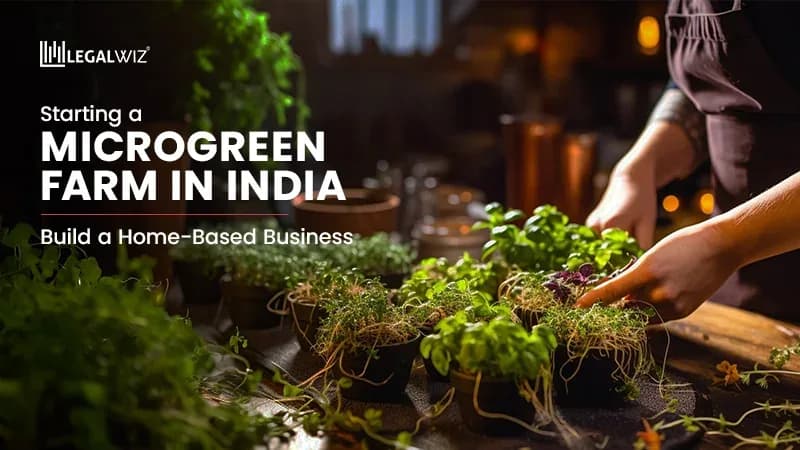
Urban homes are getting smaller, but food choices are getting sharper. This shift has quietly pushed microgreens from niche kitchens into mainstream demand.
5 min read
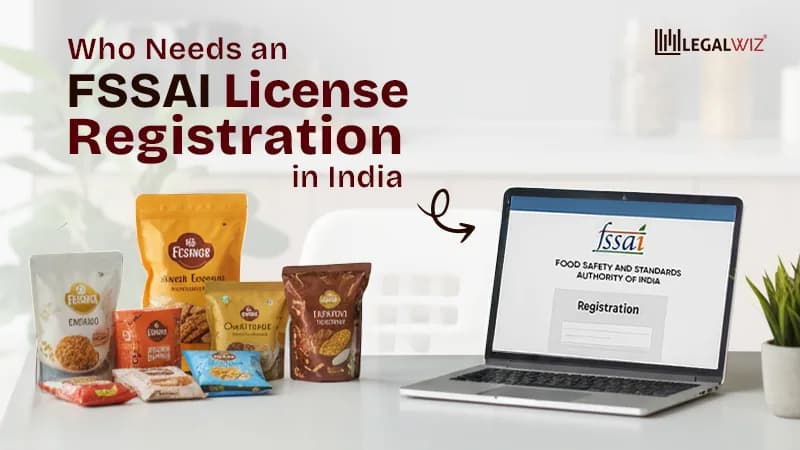
“Safe food, healthy nation.” This isn’t just a slogan. It’s the mission behind India’s food safety laws.
10 min read
We work out which of the three applies before anything is filed.
Get started