Business Registrations
How to Download Company Registration Certificate in India
After you register your company, the Ministry of Corporate Affairs issues a digital Certificate of Incorporation.
3 min read

A Class 3 Digital Signature Certificate, issued by a licensed Certifying Authority and delivered preloaded on a USB token. Required for company and LLP filings, e-tendering, customs and IP applications.
A few details, then secure checkout. Your expert takes it from there.
Starting at₹848+ Govt. Fees
Prefer to talk to someone first?
What a DSC does, which class you need, and the one step in the process that is yours rather than ours.
A Digital Signature Certificate is a legally recognised way of proving who you are online. It is issued by a Certifying Authority licensed under the Information Technology Act, 2000, and a document signed with it carries the same standing as one signed by hand.
For a business it is not optional. Company and LLP formation, compliance filings, DPIIT registration, statutory forms, tenders and contracts all require one, and so do income tax filing, GST applications, customs submissions and intellectual property e-filings.
There is only one class left. Class 1 and Class 2 certificates have been discontinued, so what you obtain today is a Class 3 DSC, valid for up to three years and delivered preloaded on a FIPS-compliant USB token. Getting it involves an OTP and a short video verification, and that verification is the step you have to complete yourself, and how quickly you do it is what decides whether this takes two days or a week.
The application is short. What makes it fail is a document the Certifying Authority will not accept, which is what we check first.
The video verification is completed by the applicant, from a link the Certifying Authority emails them. Nothing moves until it is done, which is why the two day case and the one week case are so far apart.
Documents submitted, OTP and video verification completed, fee paid to the Certifying Authority. There is no shorter route for a renewal.
Plug the token in and read the date in its management software, or use the "Verify DSC" option on the Certifying Authority’s website.
An expired DSC stops every filing that depends on it, and a statutory deadline does not move because a certificate ran out.
MCA e-filings, income tax returns, GST applications, DPIIT registration, AD Code and ICEGATE, customs submissions and DGFT transactions all require one. Without it, a company cannot make its own statutory filings.
A document signed with a DSC is legally binding under the Information Technology Act, 2000. Agreements, contracts and e-forms can be signed and sent without printing anything.
E-tendering and e-procurement portals will not accept a bid that is not digitally signed, so the certificate is what makes a business eligible to bid at all.
Trademark, patent and copyright e-filings are made with a digital signature, which is why the DSC usually comes before the IP application rather than after it.
Both are Class 3, both are valid for up to three years and both arrive on a USB token. What differs is whose name is on the certificate and what it can be used to sign.
| Attribute | Individual DSC | Organisational DSC |
|---|---|---|
| What it is for | ||
| The personIt authenticates a named individual and binds that person. Their identity is what the certificate proves. | The organisationIt signs on behalf of a business entity, through an authorised signatory. The entity is what the certificate is issued to. | |
| Filings and personal e-filingCompany and LLP registration, MCA e-filings with the Registrar of Companies, income tax returns, GST returns, EPF claims, and personal e-tenders and bidding. | Contracts and licencesSigning e-tenders, bids and contracts, DPIIT registration, customs submissions and DGFT transactions, and licences under the National Single Window System. | |
| What the application needs | ||
| PAN, Aadhaar, photographOf the individual applying. That is the whole set. | Of the signatoryThe PAN and Aadhaar of the person signing on the organisation’s behalf, plus proof of their address. | |
| NoneNothing about a business is asked for. | Five moreThe PAN of the organisation, the certificate of incorporation for a company or LLP, the MoA and AoA or the LLP agreement or partnership deed, and the GST certificate, or a recent bank statement where the entity is not GST registered. | |
| Not neededThe applicant is applying in their own name. | RequiredA letter from the organisation authorising the person applying on its behalf. This is the item most often missing from an organisational application. | |
| Next step | Get started | |
Swipe the table sideways, Individual DSC stays in view. Open any attribute to read the detail behind both answers.

Had a great experience with LegalWiz for my trademark registration. The service was smooth, and the after sales support was excellent. Although the filing took around 3 days, the team stayed connected throughout, provided clear updates, and there were no communication issues. Overall, a very professional and reliable experience.
Had a wonderful experience. The team was very supportive, responsive and completed everything on time. Thank you for the excellent support.
Jignesh was very helpful and amazing while filling the compliance form for my business. Will take your service again.
Good support team. No hindrance in executions. Go for it.
JIGNESH BHAI, I wanted to take some time to sincerely thank you for your incredible support with my MSME registration through LegalWiz. From start to finish, Jignesh Bhai, your guidance, patience, and professionalism made what could have been a stressful and confusing process feel completely smooth and manageable. You took the time to explain every step clearly, answered all my questions patiently, and ensured that nothing was left uncertain. Your attention to detail and dedication truly stood out, and it gave me a lot of confidence throughout the process. I really appreciate the effort, care, and commitment you put into helping me. Jignesh Bhai, your service has been exceptional, and I couldn’t have asked for a better experience. Heartfelt thanks once again!
Highly recommend services from Legalwiz. Got my LLP conversion process faster. Helpful staff.
Limited Liability PartnershipHad a great experience working with the team! They handled my LLP registration smoothly, guided me clearly through every step, and were always quick to respond. Really appreciate their professionalism and support. Highly recommended!
They are so quick and highly professional and experienced in the industry to carry out the requirement. Loved their services.

Trademark RegistrationVery fast & timely service. The team was very helpful and helped me find out if the brand name was available or not over the call itself without any extra cost or charge. Brilliant service, very clear communication, timely delivery & transperant pricing. Cheers!
Trademark RegistrationSatisfied with your unit service and fee grateful to connect with you service providers staff thanks regards Shivlal
File INC-20AI am very much satisfied with their service for INC 20 A. i will recommend them and definitely will keep in mind for any other service.
Close a Private Limited Companyexcellent, i appreciate accountability and transparency in the process
Private Limited CompanyLegalwiz is doing its best to give good service to clients.
Trademark RegistrationRecently got Trade Mark registered
Trademark RegistrationIt was an amazing experience from the support team. Thank you...
GST RegistrationHad a Seamless Experience in registering for GST. Been associated with them for 5 yrs now, and have done several LLP and GST registrations. Happy with their service, so i keep coming back.
The first three are needed whoever is applying. The rest apply where the certificate is in the name of an organisation.
Of the applicant, and of the organisation where the DSC is an organisational one.
Of the applicant, or of the authorised signatory in the case of an organisation.
Of the applicant.
For a company or an LLP.
The MoA and AoA of the company, the LLP agreement, or the partnership deed for a firm.
The GST certificate of the organisation, or a recent bank statement where it is not GST registered.
From the organisation, where the application is made on its behalf.
Step 01
Step 02
Step 03
Usually two days, and up to a week where the verification takes longer to complete. Subject to the Certifying Authority’s own processing.
Leverage best deals offered by the industry leaders and experience mutual growth.












Still have a question? Our team is happy to help, at no charge and with no obligation to buy anything.
Applying for and obtaining a Digital Signature Certificate from a licensed Certifying Authority.
It involves verifying your identity and being issued a secure USB token you can then use to sign documents digitally.
Three steps, and the second one is the one that takes the time:
Usually two days, and up to a week.
The difference is almost entirely the verification. Completing the OTP and the video promptly is what makes it the shorter figure.
There used to be three classes. There is one now:
Across government filings and private transactions alike:
Up to three years. Renew it before it expires. An expired certificate stops every filing that depends on it, and a statutory deadline does not move because of it.
Two ways, and both take a minute:
Yes, entirely. The process is the same as the first application: submit the documents, complete the verification, pay the fee.
Yes. An individual can hold several, for personal and professional use.
A separate email address is used for each additional certificate.
Yes. They are recognised under the Information Technology Act, 2000, and a document signed with one is legally binding.
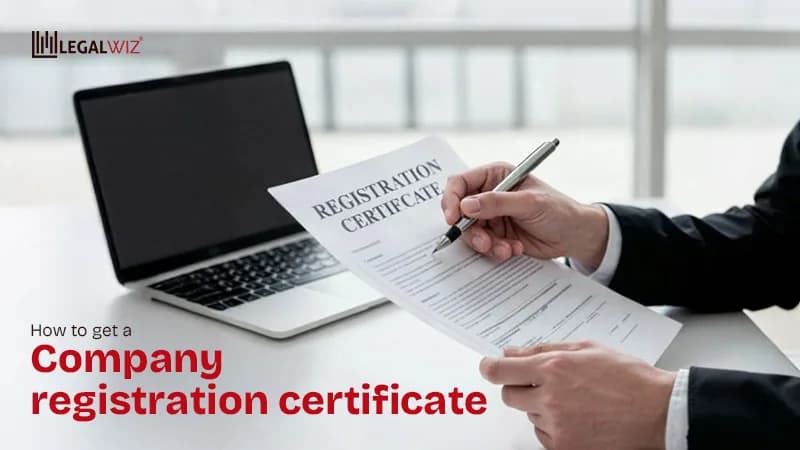
After you register your company, the Ministry of Corporate Affairs issues a digital Certificate of Incorporation.
3 min read
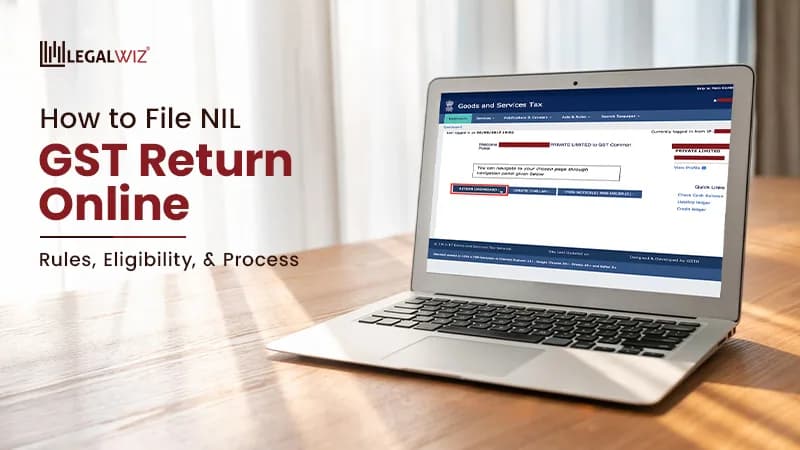
GST return filing remains mandatory even when a business records no transactions in a tax period.
5 min read
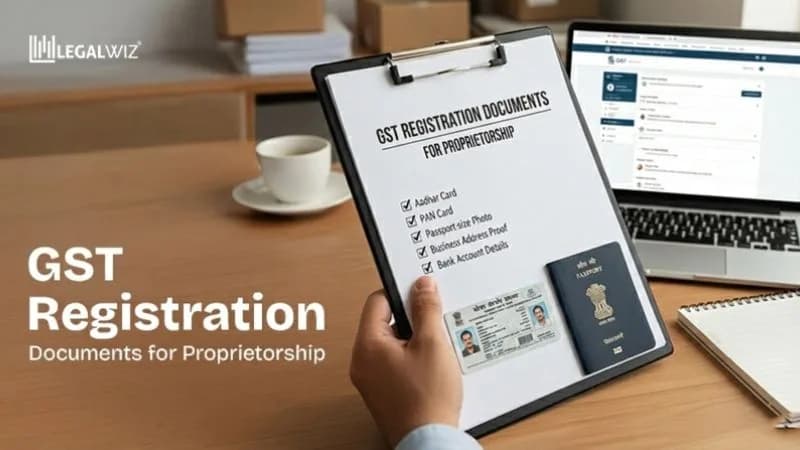
GST registration is usually the first tax compliance step for a proprietorship. Because the business and the owner are legally the same, the application relies heavily on accurate documents.
5 min read
Documents checked before filing, and the token delivered ready to use.
Get started