Legal Documents & Contracts
What is a Franchise Disclosure Document? Key Details Explained
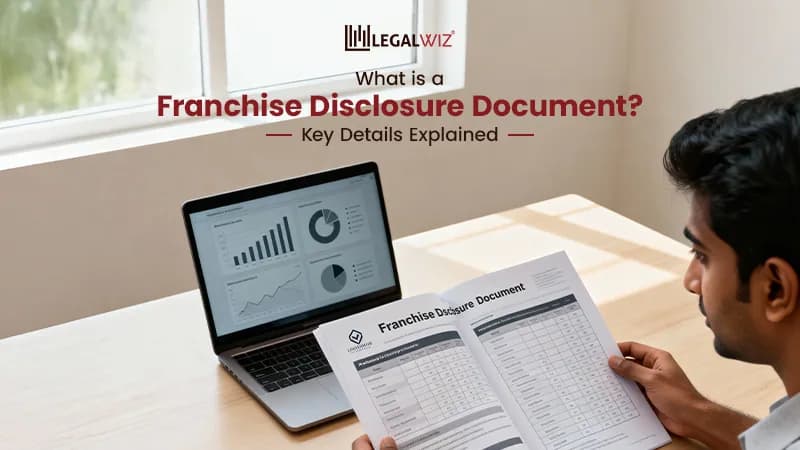
Franchising is often seen as an easier way to start a business. But it still comes with serious legal and financial responsibility.
4 min read

The agreement between the people who own the company, deciding who runs it, who can sell, and what happens when they disagree. The articles will not answer any of those.
A few details, then your expert calls you. Nothing to pay at this step.
Prefer to talk to someone first?
The contract between a company’s shareholders about management, control, and what each of them may and may not do.
A shareholders agreement is an agreement between the shareholders of a company in which they decide the management, the structure, the directors, the shareholding and the control of the company, together with their own rights and obligations. It regulates shareholders’ rights, the management of the company and its operating policy.
It is between the shareholders. The company itself is usually made a party as well, so that obligations placed on the company are binding on it, but the agreement is executed by each shareholder who is a party to it, not signed on their behalf by a director.
Its job is to answer the questions the articles of association leave open. Who sits on the board, what decisions need more than a simple majority, whether a shareholder may sell to an outsider, what happens when two equal founders will not agree: none of those are settled by the Companies Act or by a standard set of articles.
Where an investment is in progress, the term sheet comes first and this agreement is drafted from it. Tell us on the call which stage you are at.
The decisions that cannot be taken on a simple majority: new shares, borrowing, selling the business. Without a list, a majority holder can do all three alone.
Pre-emption, tag-along and drag-along rights. They are what stops a co-founder selling to a stranger, and what stops a minority blocking a sale of the whole company.
Two shareholders at fifty each is the commonest structure and the one with no tiebreak. Agree the route out before you need it.
What happens to a founder’s shares if they leave. Vesting, and a price for the shares of someone who goes early, are far easier to agree on day one.
They are two stages of one deal. Almost every point in this agreement was decided in the term sheet, which is why a founder who plans to "sort it out later" has the sequence backwards.
| Attribute | Shareholders agreement | Term sheet |
|---|---|---|
| Where each one sits | ||
| At completionOnce the terms are settled and the diligence is done. It is commonly combined with the share subscription agreement into a single SSHA. | FirstBefore the diligence and the long-form documents, while the parties are still deciding whether there is a deal to do. | |
| YesA valid and legally binding agreement governing the investment and the running of the company after it. | NoNot legally binding on any of its parties, which is the point of it: both sides can put their position without committing to it. Confidentiality and exclusivity clauses inside it are usually the exceptions and are drafted to bind. | |
| It governsIt stays in force for as long as the shareholders hold their shares, and it is what a dispute between them is decided against. | It dissolvesOnce the binding agreement comes into effect, the term sheet automatically falls away. Anything in it that was not carried across is gone. | |
| What it decides | ||
| All the shareholdersIncluding founders who are not taking new money. It regulates their rights between themselves as much as against the incoming investor. | Founders and investorIt should identify precisely who the promoters, founders and directors are, and who the investor is. Vagueness here is what makes the later documents slow. | |
| How the company runsManagement and control, the directors, the shareholding, and the rights and obligations of each shareholder: the term sheet’s commercial points turned into enforceable machinery. | The commercial shapeValuation, investment amount, shareholding structure, anti-dilution, liquidation preference, board composition, share transfer restrictions and exit options. | |
| On the draftingBy this stage the commercial terms are settled. What is still open is whether the drafting actually delivers what the term sheet said it would. | HereThis is where a point is cheap to argue. Everything agreed here is what the lawyers then draft, and reopening it at the long-form stage costs time, fees and goodwill. | |
| Next step | Get started | Know more |
Swipe the table sideways, Shareholders agreement stays in view. Open any attribute to read the detail behind both answers.

Had a great experience with LegalWiz for my trademark registration. The service was smooth, and the after sales support was excellent. Although the filing took around 3 days, the team stayed connected throughout, provided clear updates, and there were no communication issues. Overall, a very professional and reliable experience.
Had a wonderful experience. The team was very supportive, responsive and completed everything on time. Thank you for the excellent support.
Jignesh was very helpful and amazing while filling the compliance form for my business. Will take your service again.
Good support team. No hindrance in executions. Go for it.
JIGNESH BHAI, I wanted to take some time to sincerely thank you for your incredible support with my MSME registration through LegalWiz. From start to finish, Jignesh Bhai, your guidance, patience, and professionalism made what could have been a stressful and confusing process feel completely smooth and manageable. You took the time to explain every step clearly, answered all my questions patiently, and ensured that nothing was left uncertain. Your attention to detail and dedication truly stood out, and it gave me a lot of confidence throughout the process. I really appreciate the effort, care, and commitment you put into helping me. Jignesh Bhai, your service has been exceptional, and I couldn’t have asked for a better experience. Heartfelt thanks once again!
Highly recommend services from Legalwiz. Got my LLP conversion process faster. Helpful staff.
Limited Liability PartnershipHad a great experience working with the team! They handled my LLP registration smoothly, guided me clearly through every step, and were always quick to respond. Really appreciate their professionalism and support. Highly recommended!
They are so quick and highly professional and experienced in the industry to carry out the requirement. Loved their services.

Trademark RegistrationVery fast & timely service. The team was very helpful and helped me find out if the brand name was available or not over the call itself without any extra cost or charge. Brilliant service, very clear communication, timely delivery & transperant pricing. Cheers!
Trademark RegistrationSatisfied with your unit service and fee grateful to connect with you service providers staff thanks regards Shivlal
File INC-20AI am very much satisfied with their service for INC 20 A. i will recommend them and definitely will keep in mind for any other service.
Close a Private Limited Companyexcellent, i appreciate accountability and transparency in the process
Private Limited CompanyLegalwiz is doing its best to give good service to clients.
Trademark RegistrationRecently got Trade Mark registered
Trademark RegistrationIt was an amazing experience from the support team. Thank you...
GST RegistrationHad a Seamless Experience in registering for GST. Been associated with them for 5 yrs now, and have done several LLP and GST registrations. Happy with their service, so i keep coming back.
Leverage best deals offered by the industry leaders and experience mutual growth.








Still have a question? Our team is happy to help, at no charge and with no obligation to buy anything.
Every shareholder who is a party to it, in their own name. The company is normally a party as well, signed for by an authorised director, so that the obligations placed on the company bind it.
A shareholder who does not sign is not bound by it, which is why an agreement that misses one of them out is worth less than it looks.
No. Where a clause conflicts with the articles, the articles generally prevail, so an agreement that needs one has to be paired with an amendment to them.
That check is part of the drafting here, and it is the commonest defect in an agreement drafted without seeing the articles.
It is executed on stamp paper, at the rate set by the state where it is executed. It is not filed with the MCA and it is not a public document.
Two equal shareholders is the structure that needs one most. There is no tiebreak, no majority and no default mechanism in law for a disagreement, so whatever the two of you have not written down is unresolvable.
An SSHA is a share subscription and shareholders agreement, meaning the subscription for the new shares and the shareholders arrangements combined into one document, which is how an investment round is usually papered.
The shareholders half is the same document described here.
Franchising is often seen as an easier way to start a business. But it still comes with serious legal and financial responsibility.
4 min read
Most startups begin with trust, shared ambition, and the energy of building something new.
6 min read
A share transfer in a private limited company involves more than a simple exchange of ownership.
7 min read
Drafted for how your company actually takes decisions, and checked against your articles.
Get started