Legal Documents & Contracts
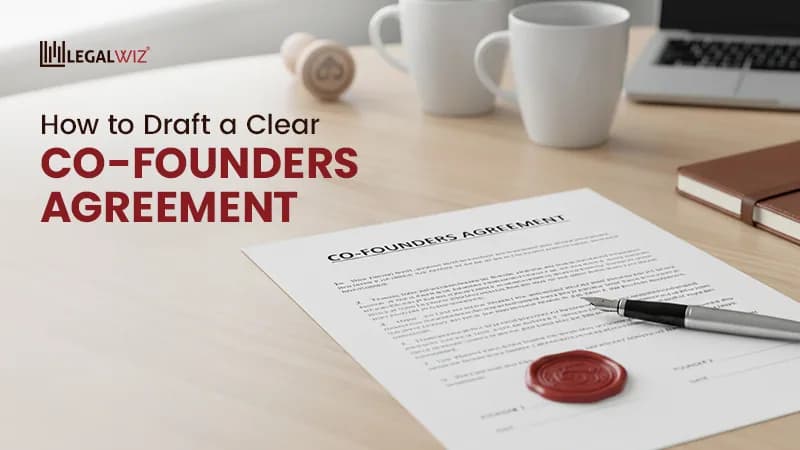
How to Draft a Clear Co-founder's Agreement
Most startups begin with trust, shared ambition, and the energy of building something new.
6 min read

The document that sets the boundaries both sides work inside. Get it right and a workplace dispute is settled by reading it; get it wrong and there is nothing to read.
A few details, then secure checkout. Your expert takes it from there.
Prefer to talk to someone first?
The written terms an employer and an employee work to, and the document a dispute is resolved against.
Of all the HR documents an organisation keeps, the employment contract is the one that does the most work. It is a legal document that helps both the employer and the employee set the boundaries within which they are expected to work with each other: the guidelines, rules, duties and obligations that define the relationship.
It sets out the position of responsibility the employee will hold, their remuneration, the term of the engagement, how it may be ended, and the other provisions the employer needs. Where a workplace dispute arises, both sides can review the terms and arrive at a settlement rather than arguing about what was agreed.
"Employment contract" and "employment agreement" describe the same document. The site has a page for each because both are searched for; nothing about the drafting or the law differs between them.
All we need from you is the name of your organisation and the commercial terms you want in the contract.
Rights and obligations are explicit from day one, available leave and increment eligibility included, rather than discovered a year in.
The organisation’s intellectual property is protected from infringement and its confidential information from disclosure, because the contract says who owns what.
Both sides review the terms and settle on them. Without a contract the same argument is about what was said in an interview.
Verbal terms are difficult to record and harder to prove. A signed contract is admissible in a court of law.
Seven provisions. The first three are in every contract; the last four are the ones a downloaded template usually gets wrong.
The roles and responsibilities the employee is expected to discharge, the date of joining, the designation, the annual remuneration, and the working days and hours.
A period, usually three to six months, in which either side may end the engagement forthwith if the fit is not right. Without it, an employer who wants to part company in month two is serving a full notice period.
The clause employees read first. It should state the mode and manner of payment, the deductions to be made, and what actually reaches the employee’s hands.
An employee may create new ideas and inventions during their tenure. Define ownership beforehand. An organisation normally retains rights over everything developed under its employment, but only if the contract says so.
Protects the organisation from an employee starting a competing business immediately after leaving, and from them taking clients or colleagues with them. It has to be reasonable in scope and duration to be permitted at all.
When and how either party may end the contract, with and without cause, and the notice period that applies. This is the clause most often left vague and most often needed.
What counts as confidential, and the circumstances in which it may be disclosed. Where the exposure is significant, a separate non-disclosure agreement with the employee is worth having as well.
The offer letter, the appointment letter, the contract and the relieving letter are four documents issued at four different moments. Employers routinely issue two of them and assume they have all four.
| Attribute | Employment contract | Offer letter | Appointment letter | Relieving letter |
|---|---|---|---|---|
| Where it falls in the hiring | ||||
| On joiningSigned on or around the joining date, with the rest of the HR formalities, before the employee is assigned any work. | After selectionOnce the candidate has cleared every round and the employer has decided to hire them, but before anything has been accepted. | After acceptanceAfter the offer has been accepted. It is usually handed over on the first day of joining. | On the last dayAfter the resignation has been accepted and the notice period has been served, on the final day of the employment. | |
| The employerPrepared by the employer and executed by both parties. | The employerUsually the HR function, on the letterhead. | The employerDrafted on the company letterhead and authorised by the HR manager or employer. | The employerOn the company letterhead, signed and authorised by the employer. | |
| BothIt is a contract, so both parties execute it. | Both, to acceptThe candidate signs to accept. Until then it binds nobody, and either side may withdraw. | BothThe employee signs a copy and returns it to the employer, which is what records that the terms were received. | The employer onlyIt is a confirmation issued to the employee rather than an agreement with them. | |
| What is in it | ||||
| The full termsRoles and duties, remuneration, probation, confidentiality, intellectual property, non-compete and how either side may end the engagement. | The offerDesignation, remuneration, reporting manager, joining date, paid leave, and the documents to be produced on joining. | The appointmentThe position, the salary and benefits, the company policies that apply, and the other terms of the employment. | That you have leftThat the resignation was accepted and the employee has been relieved of their duties and responsibilities. | |
| YesA legally binding agreement, enforceable in a court, and either party may seek a remedy for a breach of it. | Not until acceptedThe company may withdraw it at any point before acceptance, on reasonable grounds, and the candidate may decline it. | Part of the termsIt records the terms of the employment and is relied on as evidence of them. For a smaller employer it is often the only written terms there are. | NoA confirmation of a fact. It creates no obligation on either side. | |
| RarelyIt is usually confidential and is not normally shown to a subsequent employer, though its notice period governs when the employee may leave. | RarelyIt is superseded by the appointment letter. | SometimesAsked for as proof of the designation and the terms held at the previous employer. | UsuallyCommonly asked for at the point of joining, as proof that the previous employment was ended properly and no notice period is outstanding. | |
| Next step | Get started | Know more | Know more | Know more |
Swipe the table sideways, Employment contract stays in view. Open any attribute to read the detail behind all 4 answers.

Had a great experience with LegalWiz for my trademark registration. The service was smooth, and the after sales support was excellent. Although the filing took around 3 days, the team stayed connected throughout, provided clear updates, and there were no communication issues. Overall, a very professional and reliable experience.
Had a wonderful experience. The team was very supportive, responsive and completed everything on time. Thank you for the excellent support.
Jignesh was very helpful and amazing while filling the compliance form for my business. Will take your service again.
Good support team. No hindrance in executions. Go for it.
JIGNESH BHAI, I wanted to take some time to sincerely thank you for your incredible support with my MSME registration through LegalWiz. From start to finish, Jignesh Bhai, your guidance, patience, and professionalism made what could have been a stressful and confusing process feel completely smooth and manageable. You took the time to explain every step clearly, answered all my questions patiently, and ensured that nothing was left uncertain. Your attention to detail and dedication truly stood out, and it gave me a lot of confidence throughout the process. I really appreciate the effort, care, and commitment you put into helping me. Jignesh Bhai, your service has been exceptional, and I couldn’t have asked for a better experience. Heartfelt thanks once again!
Highly recommend services from Legalwiz. Got my LLP conversion process faster. Helpful staff.
Limited Liability PartnershipHad a great experience working with the team! They handled my LLP registration smoothly, guided me clearly through every step, and were always quick to respond. Really appreciate their professionalism and support. Highly recommended!
They are so quick and highly professional and experienced in the industry to carry out the requirement. Loved their services.

Trademark RegistrationVery fast & timely service. The team was very helpful and helped me find out if the brand name was available or not over the call itself without any extra cost or charge. Brilliant service, very clear communication, timely delivery & transperant pricing. Cheers!
Trademark RegistrationSatisfied with your unit service and fee grateful to connect with you service providers staff thanks regards Shivlal
File INC-20AI am very much satisfied with their service for INC 20 A. i will recommend them and definitely will keep in mind for any other service.
Close a Private Limited Companyexcellent, i appreciate accountability and transparency in the process
Private Limited CompanyLegalwiz is doing its best to give good service to clients.
Trademark RegistrationRecently got Trade Mark registered
Trademark RegistrationIt was an amazing experience from the support team. Thank you...
GST RegistrationHad a Seamless Experience in registering for GST. Been associated with them for 5 yrs now, and have done several LLP and GST registrations. Happy with their service, so i keep coming back.
Leverage best deals offered by the industry leaders and experience mutual growth.










Still have a question? Our team is happy to help, at no charge and with no obligation to buy anything.
No, and no law requires one. It is advisable to have one all the same, to define the rights and duties of both parties and avoid conflicts later.
Usually on the joining date. Completing the HR formalities before the employee is assigned to their desk is the normal practice, and it is easier than chasing a signature afterwards.
Not by law. In practice an organisation will not take on an employee who refuses, which makes it a mandatory formality of the hiring rather than a legal one.
Yes. An employment contract is a legally binding agreement and is enforceable in a court of law. Where either side breaches its terms, the other may approach the relevant court or forum for a resolution.
It does not need to be notarised. It may be printed on stamp paper, and where it is, the stamp duty payable depends on the state you are in.
A contract becomes legally binding once it is signed, so it is worth having a lawyer draft or review the terms. The restrictive clauses in particular, non-compete, non-solicitation and IP assignment, are the ones a court will read narrowly if they are drafted too widely.
Most startups begin with trust, shared ambition, and the energy of building something new.
6 min read

According to the relevant studies, the Indian E-commerce market is growing at a substantial rate.
5 min read

The dictionary definition of the term solicitation means ‘the act of asking for or trying to obtain something from someone’.
5 min read
One master contract, drafted for your business, reusable for every hire.
Get started