Difference Between MGT-7 and MGT-7A: Applicability, Due Dates & Penalties
Published On: Nov 5, 2025 • Last Updated: Feb 2, 2026 • 6.8 min read
MGT-7 and MGT-7A are annual return forms filed by different types of companies. MGT-7 applies to most private and public companies, while MGT-7A is applicable only to OPCs and small companies. The difference between MGT-7 and MGT-7A lies in form complexity, disclosures, certification, and compliance burden. MGT-7A involves fewer disclosures, no mandatory certification, and applies to companies with paid-up capital up to ₹4 crore and turnover up to ₹40 crore. This blog explains applicability, key differences, due dates, filing requirements, and penalties for both forms, which are filed electronically on the MCA portal.

Every company registered in India is required to file an annual return with the Ministry of Corporate Affairs as part of its ongoing compliance obligations. Depending on the type and size of the company, this return is filed either in Form MGT-7 or Form MGT-7A. Understanding the difference between MGT-7 and MGT-7A is essential to ensure correct filing, meet due dates, and avoid penalties under annual compliances for private limited companies. While both forms serve the same compliance purpose, they differ significantly in applicability, disclosures, and certification requirements.
Key Differences Between MGT-7 and MGT-7A
Although both forms are annual returns filed under Section 92 of the Companies Act, 2013, MGT-7 and MGT-7A are not interchangeable. The difference between MGT-7 and MGT-7A lies in who must file them, the level of disclosure required, and the overall compliance burden.
Below is a clear breakdown of how the two forms differ.
1. Applicability of MGT-7 vs MGT-7A
Form MGT-7 is applicable to:
- Public limited companies (listed and unlisted)
- Private limited companies that do not qualify as small companies
- Section 8 (non-profit) companies
- Holding and subsidiary companies
Form MGT-7A is applicable only to:
- One Person Companies (OPCs)
- Small companies
A small company is defined as a company with:
- Paid-up capital up to ₹4 crore, and
- Turnover up to ₹40 crore
This classification ensures that smaller entities follow a simplified compliance process, while companies with higher regulatory exposure provide detailed disclosures.
Annual return filing requirements vary depending on a company’s size and compliance thresholds. Many businesses review annual compliances for a private company based on turnover to understand how reporting obligations change as the company grows. This helps in planning compliance timelines and avoiding last-minute filings.
2. Purpose of Form MGT-7 and MGT-7A
Form MGT-7 is designed to provide a comprehensive overview of a company’s structure, activities, and compliance status. It is intended for organisations that attract higher regulatory and public scrutiny.
Form MGT-7A serves the same purpose but in a simplified format, making compliance easier for small companies and OPCs by requiring only essential disclosures.
This explains the practical MGT-7 and MGT-7A difference in terms of reporting depth and compliance burden.
3. Level of Disclosure in MGT-7 vs MGT-7A
Form MGT-7 requires extensive disclosures, including:
- Basic company details – name, address, CIN, email, and website
- Nature of business and main activities
- Share capital – authorised, issued, subscribed, and paid-up
- Details of promoters, directors, and KMP – names, DINs, and addresses
- Board and general meeting details and attendance
- Remuneration of directors and KMP
- Penalties, fines, or prosecutions (if any)
- Number of shareholders, debenture holders, and other security holders
- Branch office details in India and abroad
- Details of subsidiaries, holding and associate companies
- Loans, guarantees, and securities
- Related party transactions
- Corporate Social Responsibility (CSR) disclosures
- Compliance declarations under the Companies Act, 2013
- Summary of indebtedness
- Shareholding pattern and investor classification
- Changes in directors, turnover, net worth, and foreign institutional holdings
Form MGT-7 requires significantly more disclosures compared to MGT-7A. For companies required to file this form, an overview of Form MGT-7 helps in understanding the depth of information and attachments involved.
Form MGT-7A requires limited disclosures, such as:
- Basic company details
- List of shareholders and debenture holders
- Details of directors and key management personnel
- Shareholding pattern and year-on-year changes
- Principal business activities and associate companies
- Board and member meeting details
- Directors’ remuneration (where applicable)
- Disclosure of penalties or punishments, if any
MGT-7A follows a simplified certification process. While professional certification is not mandatory, if a small company or OPC has a Company Secretary, the form may still be digitally signed.
The annual return filed through either form becomes part of the MCA public records. For companies required to hold an AGM, Form MGT-7 must be filed within 60 days of the AGM. OPCs file Form MGT-7A within the prescribed statutory timeline.
4. Documents Required for MGT-7 and MGT-7A
Form MGT-7 generally requires multiple attachments, including:
- List of shareholders and debenture holders
- Details of meetings and resolutions
- Form MGT-8 (where applicable)
- Orders related to penalties or compounding
Form MGT-7A requires only essential attachments and declarations, reducing documentation and compliance effort.
5. Certification Requirement
Form MGT-8 is required to be certified by a Practicing Company Secretary (PCS) only for Form MGT-7, if the company meets certain thresholds.
As per Rule 11(2) of the Companies (Management and Administration) Rules, 2014, certification by a PCS is mandatory if:
- Paid-up share capital is ₹10 crore or more, or
- Turnover is ₹50 crore or more
This certification requirement applies only to Form MGT-7.
Form MGT-7A does not require Form MGT-8 certification under any circumstance, which significantly reduces professional costs for small companies and OPCs.
6. Filing Complexity
Form MGT-7 involves extensive data entry, validations, and attachments, making the filing process detailed and time-consuming.
Form MGT-7A is shorter, simpler, and involves fewer validations, making it easier to file with minimal chances of error.
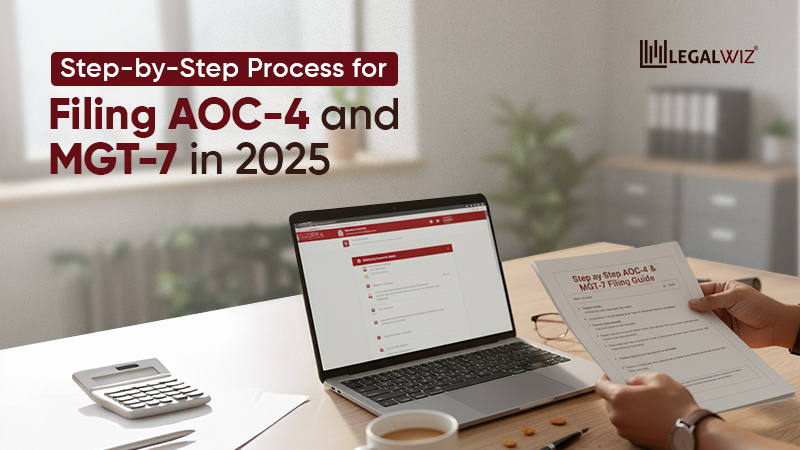
Form MGT-7 filing is often part of a broader annual compliance sequence that includes financial statement filings. Companies that are new to annual compliance often refer to the step-by-step process for filing AOC-4 and MGT-7 to understand the correct order and avoid common filing mistakes. This is especially useful for companies filing both forms for the first time.
7. Compliance Cost
MGT-7 generally involves higher compliance costs due to professional certification and detailed review requirements.
MGT-7A is cost-effective and can often be filed internally without mandatory professional involvement.
8. Digital Signature Requirement
- MGT-7 must be digitally signed by a Director and a Company Secretary (if appointed).
- MGT-7A requires only the Director’s Digital Signature Certificate (DSC).
9. Time and Effort Involved
MGT-7 takes longer to prepare and verify due to extensive disclosures and documentation.
MGT-7A can be completed quickly with minimal documentation and review.
In Summary
- Form MGT-7 is meant for larger or more regulated companies requiring detailed disclosures and certification.
- Form MGT-7A is designed for small companies and OPCs, offering a simplified annual return filing process.
Both forms serve the same compliance objective under the Companies Act, 2013, but the difference between MGT-7 and MGT-7A lies in their depth, effort, cost, and applicability.
Due Dates for Filing MGT-7 and MGT-7A
Both Form MGT-7 and Form MGT-7A must be filed within 60 days from the date of the Annual General Meeting (AGM).
- Companies with an AGM: Due date is AGM date + 60 days
- OPCs (no AGM): Due date is calculated from the date on which the AGM would have been due
Key points:
- An AGM must generally be held within six months from the end of the financial year.
- If the AGM date is extended by the ROC, the 60-day period for filing begins from the revised AGM date.
Timely filing helps maintain accurate MCA records and avoid penalties.
Annual compliance typically involves filing multiple forms with the MCA, each serving a different purpose. Since financial statements are filed separately, many companies first complete AOC-4, making it useful to understand the Form AOC-4 filing process before proceeding with the annual return. Following the correct sequence helps prevent errors and resubmissions.
Late Filing Fees and Penalties
If Form MGT-7 or MGT-7A is filed after the due date, late filing fees are levied under Section 403 of the Companies Act, 2013:
- Late fee: ₹100 per day from the day after the due date
- There is no maximum cap on the late fee
For example, a delay of 30 days results in a late fee of ₹3,000.
Delayed filing may also reflect a non-compliant status on MCA records, which can affect future filings or approvals.
Conclusion
Filing the correct annual return form is a core compliance responsibility under the Companies Act, 2013. While both MGT-7 and MGT-7A serve the same statutory purpose, choosing the correct form based on company type is essential to ensure accurate disclosures, timely filing, and avoidance of penalties.
MGT-7 applies to companies with broader compliance requirements, while MGT-7A simplifies annual return filing for OPCs and small companies. Staying compliant not only avoids financial penalties but also keeps your company’s MCA records accurate and up to date.
For businesses that want to manage their annual compliance filings accurately and on time, LegalWiz’s professional support can help reduce errors and compliance risks.
Frequently Asked Questions
What is the difference between MGT-7 and MGT-7A?
MGT-7 is a detailed annual return for most companies, whereas MGT-7A is a simplified version for One Person Companies and small companies, with fewer disclosures and no mandatory certification.
Who must file Form MGT-7A?
Form MGT-7A must be filed only by One Person Companies (OPCs) and small companies as defined under the Companies Act, 2013.
When is the due date for filing MGT-7 or MGT-7A?
Both forms must be filed within 60 days from the AGM date. For OPCs that do not hold an AGM, the due date is calculated from the date the AGM would have been due.
What happens if I file MGT-7 or MGT-7A late?
Late filing attracts a fee of ₹100 per day under Section 403 of the Companies Act, 2013, with no upper limit on cumulative penalties.
Do MGT-7 and MGT-7A require digital signatures?
Yes. MGT-7 must be signed by the Director and, if appointed, the Company Secretary. MGT-7A requires only the Director’s DSC.

Sapna Mane
Sapna Mane is a skilled content writer at LegalWiz.in with years of cross-industry experience and a flair for turning legal, tax, and compliance chaos into clear, scroll-stopping content. She makes sense of India’s ever-changing rules—so you don’t have to Google everything twice.
![Form AOC-4 Filing – Due Date, Fees & Compliance Guide [FY 2024-25]](https://www.legalwiz.in/wp-content/uploads/Form-AOC-4-Filing-1.jpg "Form AOC – 4 Filing")