Form MGT-8: Meaning, Applicability & Filing Guide
Published On: Dec 11, 2025 • Last Updated: Apr 6, 2026 • 6.4 min read

Staying compliant under the Companies Act, 2013 isn’t just about meeting deadlines. It’s about making sure the information your company files is accurate, complete, and backed by proper records. That’s where Form MGT-8 becomes important.
For companies that cross certain thresholds, this certification by a Practicing Company Secretary adds an extra level of assurance before the annual return goes to the MCA. With the move to the V3 portal and tighter checks on filings, companies are expected to be more careful than ever. Many businesses now review their records early in the year as part of their annual compliance for the company, which helps make MGT-8 easier to obtain when the filing season starts.
This guide covers when MGT-8 applies, what it includes, how it works, and the consequences of missing it, so you can manage the process with clarity and confidence.
What is Form MGT-8? Purpose and Legal Basis
Form MGT-8 is essentially a brief secretarial audit that supports the accuracy of a company’s annual return. It’s issued by a Practicing Company Secretary (PCS) and confirms whether the company has followed the rules under the Companies Act, 2013. This includes checks on board meetings, share transfers, related-party transactions, loans, borrowings, and other compliance areas that regulators often review closely.
The requirement comes from Rule 11(2) of the Companies (Management and Administration) Rules, 2014. The form includes the PCS’s details, their UDIN, and any qualifications or remarks they need to highlight.
Unlike Form MGT-7, which is self-filed by the company, MGT-8 adds an independent validation. This gives the MCA an added layer of confidence that the data in the annual return is correct and supported by proper records.
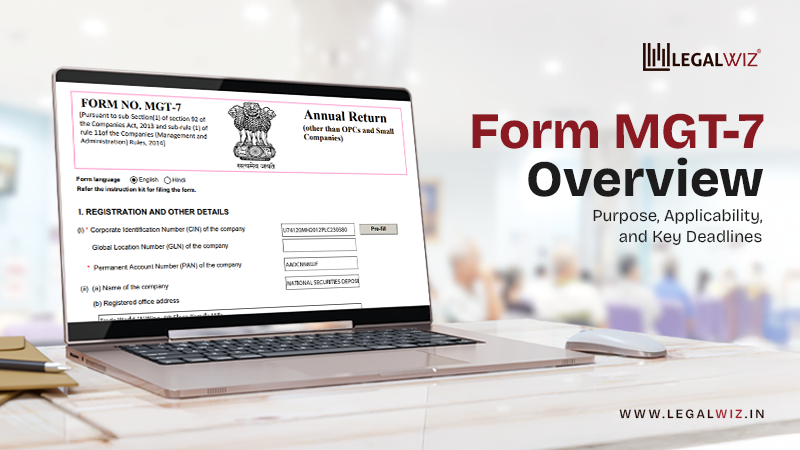
Because MGT‑7 and MGT‑8 go hand in hand, knowing the basics of MGT‑7 makes the filing process much easier. For a clear explanation, see: Form MGT‑7 Overview: Purpose, Applicability, and Key Deadlines
Applicability of MGT-8
Filing form MGT-8 isn’t required for every company. It applies only to entities that fall within specific thresholds set under the Companies Act.
- All listed companies
- Unlisted companies that had either:
- Paid-up share capital of ₹10 crore or more, or
- Turnover of ₹50 crore or more in the previous financial year
These companies need a PCS to verify their annual return before filing MGT-7.
Understanding where your company stands in the overall compliance framework makes it easier to stay ready for requirements like Form MGT-8. If you want to know what filings and records help a business maintain its active status on the MCA portal, the guide on how to maintain active status of your private company through compliance gives a clear, year-round view.
Key Contents and MGT-8 Format
Form MGT-8 is a detailed compliance certification, ensuring that the Annual Return accurately discloses the financial year-end facts and that the company has adhered to the Companies Act, 2013, and related rules throughout the year. The form confirms key compliance aspects, explained smoothly as follows:
- The company’s status under the Act is correctly maintained.
- Statutory registers and records have been properly maintained, and all necessary entries have been made within the prescribed timelines.
- All required forms and returns have been filed with the Registrar of Companies, Regional Director, or other authorities, either within or beyond the prescribed deadlines.
- Board of Directors’ meetings and committees, as well as members’ meetings, were convened and held on due dates; notices were properly issued; and all proceedings, circular resolutions, and postal ballots have been documented and signed in the minute books or registers.
- The Register of Members and Security holders was closed properly as required.
- Advances and loans to directors or related persons comply with Section 185 of the Act.
- Contracts and arrangements with related parties follow the provisions of Section 188.
- All securities—whether issued, allotted, transferred, transmitted, redeemed, or bought back—have been dealt with according to legal standards, including changes to share capital and issue of security certificates.
- Dividend rights, rights shares, and bonus shares pending registration of transfer have been appropriately kept in abeyance.
- Dividends have been declared and paid properly, with unpaid or unclaimed amounts transferred to the Investor Education and Protection Fund per Section 125.
- The company’s audited financial statements and directors’ reports have been signed in compliance with Section 134.
- The constitution, appointment, reappointment, retirement, or filling of casual vacancies of directors and key managerial personnel, along with disclosure of their remuneration, is compliant.
- Auditor appointments, reappointments, or casual vacancies have been handled as per Section 139.
- Required approvals from various authorities like the Central Government, Tribunal, Regional Director, ROC, or Court have been obtained where necessary.
- Transactions related to deposits, including acceptance, renewal, or repayment, have been correctly processed.
- Borrowings from directors, members, financial institutions, banks, and others, along with the creation, modification, or satisfaction of charges, comply fully.
- Loans, investments, guarantees, or securities provided to other entities meet the requirements of Section 186.
- Any alterations to the Memorandum or Articles of Association have been duly made and recorded.
Form MGT-8 is divided into sections, typically starting with Part A containing company identification details, followed by Part B which details all the compliance checkpoints listed above, and culminating in the certification section where a practicing Company Secretary affirms adherence with their signature and unique UDIN (Unique Document Identification Number).
Due Date for Form MGT-8 Filing and Associated Fees
The MGT-8 due date is tied directly to the AGM timeline. Since the annual return (MGT-7 or MGT-7A) must be filed within 60 days from the AGM, MGT-8 must be obtained before filing the annual return.
For example:
- AGM on 30 September
- MGT-7 and MGT-8 due by 29 November
The timeline shifts if the AGM is extended. Missing this window can lead to late fees and added scrutiny on your filings.
Since the MGT-8 deadline depends on the AGM timeline, it helps to understand how AGMs work under company law. For a quick overview of their rules and procedures, you can refer to our guide on Annual General Meeting in company law.
The fee for submitting the annual return depends on the company’s authorized share capital. Higher capital bands come with higher statutory filing fees. If the submission is delayed, the MCA also charges a daily additional fee, which can add up quickly. Planning the review and certification early helps avoid penalties and keeps the process smooth, especially with the tighter checks on the MCA V3 portal.
Penalties for Non-Filing of Form MGT-8
Not filing Form MGT-8 on time can lead to strict action from the MCA. Since it supports the accuracy of the annual return, any delay or non-submission is taken seriously. Knowing the penalties upfront makes it easier to stay on track and dodge avoidable trouble.
| Entity | Penalty Description | Fine/Imprisonment Details |
| Company | Failure to file certified annual return | ₹50,000 to ₹5,00,000 |
| Officers in Default (Directors/KMP) | Non-filing or incorrect return | ₹50,000 to ₹5,00,000 or up to 6 months imprisonment, or both |
| Practicing Company Secretary (PCS) | False/non-conforming certification | ₹50,000 to ₹5,00,000 + ICSI disciplinary action under Company Secretaries Act, 1980 |
| False Statements (Section 448) | Omissions or inaccuracies in returns/certificates | Fine + potential imprisonment; disciplinary measures |
| Fraud (Section 447) | Serious fraud in filing/certification | 6 months to 10 years imprisonment; fine ≥ fraud amount, up to 3x (min. 3 years for public interest cases) |
A Smarter Way to Stay Ahead of Compliance Risks
MGT-8 filing gives companies a reliable way to show that their annual return is accurate and backed by proper records. It also helps the MCA review filings with more confidence, which is why timely certification matters. When you plan the review early, keep your documents updated, and stay familiar with the V3 portal flow, the filing process becomes much easier.
If you want a smoother way to handle annual compliance for a private company, annual returns, or MCA filings, LegalWiz.in can guide you through each step with clear, reliable support.
Frequently Asked Questions
How does Form MGT-8 help directors and KMPs?
By certifying the annual return through a PCS, it provides an added layer of assurance and reduces the risk of personal liability for errors in MGT-7.
What lapses are usually flagged by PCS in MGT-8?
Typical issues include missing registers, incomplete meeting records, and errors in share transfer documentation. Keeping records updated helps avoid such remarks.
What if MGT-8 is filed late?
Missing the deadline for Form MGT‑8 exposes the company and its certifying PCS to heavy fines and legal consequences.

Avani Kagathara
Avani Kagathara brings order to legal chaos as a Content Writer at LegalWiz.in. Armed with an accounts and audits background, she has a knack for making complex legal topics feel less intimidating. Fair warning: she's equal parts thoughtful analyst and spontaneous free spirit.