Types of Intellectual Property Rights in India
Published On: Jan 13, 2026 • Last Updated: Apr 7, 2026 • 5.6 min read
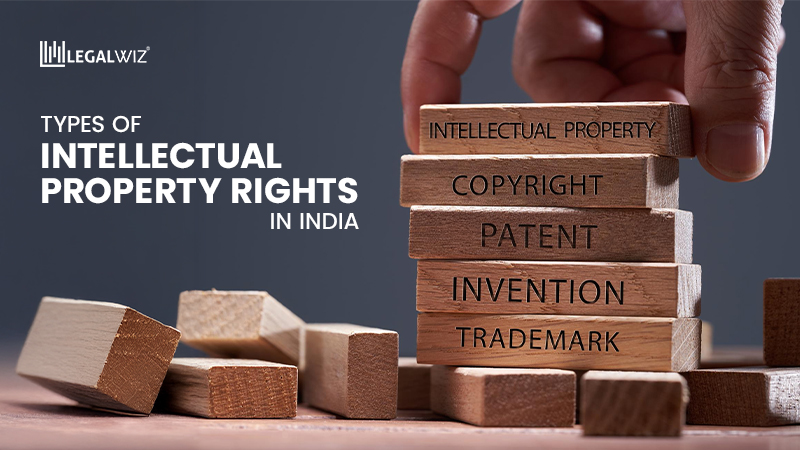
Intellectual property rights protect original creations such as brands, creative content, inventions, designs, and confidential business information. In India, main types of intellectual property rights include trademarks, copyrights, patents, industrial designs, GIs, trade secrets, etc. Understanding how each of these works in practice, and choosing the right form of protection early, helps creators and businesses prevent misuse, preserve commercial value, and reduce the risk of future legal disputes.
Ideas travel fast. Brands scale even faster. What often lags behind is legal protection. That gap is where disputes begin.
Knowing all types of intellectual property rights helps creators, founders, and growing businesses protect what they build before it is copied, diluted, or lost. Intellectual property, or IP, protects legal rights given to people who create something original, whether it is product, design, name, process, or piece of creative work.
In this guide, we will explain what is IP, why IP registration matters, and how different protections work in practice.
What is Intellectual Property?
Intellectual Property (IP) refers to legal rights granted over creations of mind, such as inventions, brand names, logos, designs, music, and written content. These rights allow creators or businesses to control how their work is used, shared, or commercialised. IP protection helps prevent unauthorised use and supports innovation, brand value, and fair competition.
You can use intellectual property rights to protect your inventions, artistic works, brand identities, designs, confidential information, and even region-specific products.
If you want to understand how intellectual property works beyond definitions, with practical examples and classifications, our guide on what is intellectual property rights explains it in detail: What Is Intellectual Property Rights? Types & Importance
Different Types of Intellectual Property Rights in India
There are several different types of intellectual property rights, each built to protect specific form of creation. Knowing which one applies to your work is first step toward real protection.
1. Trademarks
Trademarks are intellectual property rights that protect brand’s identity, such as names, logos, symbols, slogans, or any mark that distinguishes one business from another.
Trademark registration gives owner exclusive rights to use mark and prevents others from using identical or confusingly similar marks in course of trade.
What it protects
- Brand names
- Logos and symbols
- Slogans and taglines
Validation period of trademark registration
- 10 years, renewable indefinitely
Common examples
- Coca-Cola logo
- Nike swoosh
- McDonald’s golden arches
- Brand names of startups and companies
Trademarks play critical role within types of intellectual property rights that support long-term brand value.
2. Copyright
Copyright protects original expression, not ideas themselves. It applies to creative and intellectual works once they are fixed in tangible form.
Getting your copyright registration allows creators to control reproduction, distribution, and public use of their work.
What it protects
- Literary and artistic works
- Music and films
- Software and digital content
Validation period of copyright
- Usually 60 years after creator’s death
Common examples
- Books and articles
- Movies and web series
- Songs and sound recordings
- Mobile apps and software code
- Paintings and photographs
Copyright is one of most commonly used intellectual property rights in India, particularly among writers, artists, filmmakers, software developers and media businesses. For creators and organisations that rely on original work, understanding different types of copyright in India is essential to know what can be protected and how those rights are enforced.
3. Patents
Patents protect inventions. This includes new products, processes, or technical improvements that are useful and not obvious.
A patent gives inventor exclusive rights to make, use, or sell the invention for fixed time. In return, invention is disclosed publicly.
What it protects
- Functional inventions
- Technical processes
- Product improvements
Validation period of patents
- 20 years from the filing date
Common examples
- Pharmaceutical drugs
- Medical devices
- Engineering machinery
- Technology-based manufacturing processes
Patents are pillar among major types of IP rights, especially in research-driven industries.
For deeper look at why patent protection matters, read our detailed guide on understanding various benefits of patent protection.
4. Trade Secrets
Trade secrets protect confidential business information that gives competitive edge. Unlike other IP, they are not registered.
Protection depends on secrecy and contractual safeguards.
What it protects
- Manufacturing formulas
- Business strategies
- Client databases
Validation period of trade secrets
- As long as secrecy is maintained
Common examples
- Coca-Cola’s secret recipe
- Google’s search algorithm
- Internal pricing strategies
- Customer databases
Trade secrets are often overlooked, yet they are essential among quieter types of IP rights used in business operations.
5. Industrial Designs
Industrial design rights protect visual appearance of product. This includes shape, pattern, or ornamentation, not functionality.
These rights help products stand out in competitive markets.
What it protects
- Product shapes
- Surface patterns
- Visual configurations
Validation period of industrial designs
- 10 years, extendable by 5 years
Common examples
- Smartphone body designs
- Car exterior designs
- Furniture shapes
- Packaging designs
Design protection fits squarely within types of IPRs in India used by manufacturing and consumer brands.
6. Geographical Indications
Geographical indications protect products linked to specific region. Quality or reputation of product must come from that place.
These rights are usually held collectively.
What it protects
- Agricultural goods
- Handicrafts
- Regional food products
Validation period of GIs
- 10 years, renewable
Common examples
- Darjeeling tea
- Basmati rice
- Banarasi sarees
- Kanjeevaram silk
- Blue pottery of Jaipur
GIs preserve heritage while also forming part of broader types of IP rights that support regional economies.
7. Integrated Circuit Layout Designs
This category protects three dimensional layout of semiconductor chips and electronic circuits.
It prevents unauthorised copying of circuit designs used in electronic products.
What it protects
- Microchip layouts
- Semiconductor configurations
Validation period of circuit design
- 10 years from registration
Common examples
- Microchip layouts in smartphones
- Processor designs in electronic devices
- Semiconductor circuits used in appliances
Though niche, this is one of more technical different types of intellectual property rights recognised under Indian law.
8. Plant Varieties and Farmers’ Rights
These rights protect new plant varieties developed through breeding or scientific methods. They also recognise traditional contributions made by farmers.
What it protects
- New plant varieties
- Farmers’ seed rights
Validation period of plant varieties
- 15 to 20 years, depending on crop
Common examples
- Hybrid rice varieties
- Genetically modified cotton
- High-yield wheat strains
This category reflects how intellectual property rights in India extend beyond technology and brands into agriculture.
9. Emerging IP Categories
Innovation does not stand still, and neither does IP law.
Growing areas include:
- AI-generated works and algorithms
- Digital assets such as domain names
- Protection of traditional knowledge systems
Why Intellectual Property Matters
Strong IP protection fuels progress. It does more than secure legal rights.
- Rewards creators and inventors
- Strengthens business value
- Builds consumer trust
- Supports fair competition
- Drives economic growth
In knowledge-driven markets, IP often becomes the most valuable asset on the balance sheet.
Conclusion
Every idea does not need same shield. Some need patents. Others rely on trademarks or copyright. The real challenge lies in choosing right protection at right time.
Understanding types of intellectual property rights allows individuals and businesses to secure ownership early and avoid disputes later. For those navigating filings, registrations, or strategy decisions, professional guidance often makes procedure clearer and faster. Our team at LegalWiz helps you register your IP, from identifying the right category to managing the process smoothly and without avoidable delays.
Frequently Asked Questions
How many types of intellectual property rights are recognised in India?
India recognises multiple categories including patents, trademarks, copyright, designs, trade secrets, geographical indications, plant varieties, and circuit layouts.
Which IP right is best for startups?
It depends on business. Brands usually start with trademarks. Product based startups often focus on patents or designs.
Can one creation have more than one IP protection?
Yes. Product can be protected by patent for function, design for appearance, and trademark for branding.
What happens if IP is not registered?
Enforcement becomes difficult. Proving ownership during disputes or infringement claims is far harder without registration.
Do intellectual property rights expire?
Most do. Each IP type has fixed term, though some, like trademarks, can be renewed indefinitely.

Sapna Mane
Sapna Mane is a skilled content writer at LegalWiz.in with years of cross-industry experience and a flair for turning legal, tax, and compliance chaos into clear, scroll-stopping content. She makes sense of India’s ever-changing rules—so you don’t have to Google everything twice.