IEC Import Export Code: Meaning, Definition and Key Benefits
Published On: Dec 16, 2025 • Last Updated: May 7, 2026 • 6.8 min read
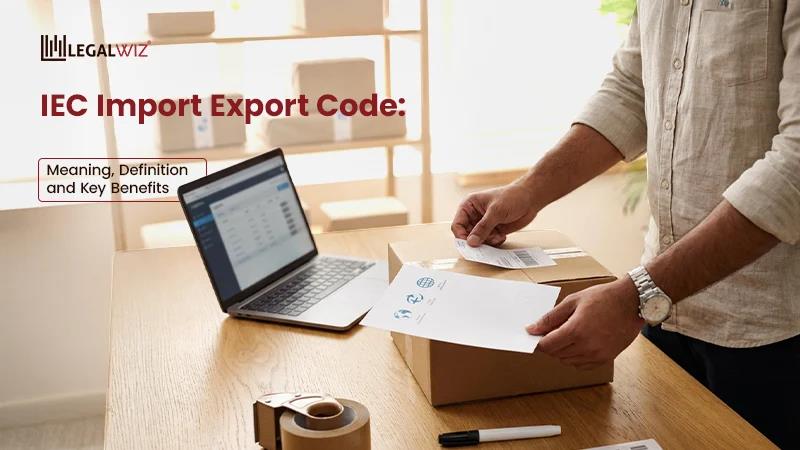
International trade never slows down. Goods move in every direction, and every country sets its own rules to keep this movement steady. For businesses in India that plan to enter foreign markets, one requirement stands above the rest. The Importer Exporter Code, better known as the IEC Code, acts as your passport to global commerce.
If you are exploring exports, preparing for your first import order, or simply want to understand the basics of India’s foreign trade framework, it helps to understand the IEC Code meaning, why it matters, and how the Import Export Code registration works.
What Is an IEC Code?
An IEC code is a 10-digit PAN-based Importer Exporter Code issued by the DGFT. It serves as the primary identification for businesses and individuals involved in import or export activities in India and is required to conduct cross-border trade.
It opens the door to importing goods, exporting products, and availing export-linked benefits under government policy. If you want a clear sense of what those benefits are and exactly what documents and processes are required, our blog offers a detailed overview: Advantages and Requirements for IEC for Indian Businesses
Every individual, business, or organisation that imports or exports needs this number. Without it, customs will not clear goods, banks will not release foreign exchange, and export benefits cannot be claimed. Think of the IEC as a long-term licence for international trade. Once issued, it gives you the legal footing to bring goods into India or send them out.
Why the IEC Code Matters
The IEC Code is mandatory for all trade transactions. It has several direct advantages, shaping how trade is handled and ensuring that every shipment moves without trouble.
1. Essential for Customs and Shipping
Every shipment requires clearance. Customs officers check your IEC Code before allowing goods to move in or out of the country. Shipping companies, freight agents, and logistics partners also ask for it while preparing documents.
When your business doesn’t have an IEC Code, that means no shipment for you.
2. Access to Export and Import Incentives
The government offers several benefits to support exporters and importers. You need an IEC to apply for benefits under DGFT schemes such as:
- EPCG
- Advance Authorisation
- RoDTEP
You cannot apply for any of them without a valid IEC. Exporters also rely on the IEC Code for GST refunds under ITC. Those who prefer to export without paying IGST must furnish a Letter of Undertaking under GST. The IEC Code ties your trade activity to these incentives and keeps the paperwork consistent.
3. For Foreign Currency Transactions
Whenever you make or receive a foreign payment, the bank checks your IEC Code. This keeps the transaction compliant with FEMA and helps authorities monitor the inflow and outflow of foreign exchange linked to trade.
For a broader view on preparing your business for global expansion, you can explore this guide: Know what you need to take your business global
4. Lifelong Validity
Once the IEC is issued, the code does not expire. It remains valid for life, provided you verify or update it each year between April and June. This annual confirmation keeps the IEC active.
5. Business Credibility
Foreign buyers, suppliers, and lenders prefer dealing with registered traders. A valid IEC Code signals that your business is compliant, credible, and ready for international contracts.
If you want to understand how the IEC strengthens a company’s position in global trade, this guide offers a clear breakdown of its business advantages: Advantages of Importer – Exporter Code for Businesses
Who Needs an IEC Code
Most commercial importers and exporters in India require the IEC Code registration. This includes:
- Individuals running small trading operations
- Sole proprietors
- Partnership firms and LLPs
- Private or public limited companies
- Trusts, societies, and HUFs involved in trade
If you earn, buy, or send anything outside India for business, the IEC becomes essential.
Who Is Exempt from the IEC Code
There are limited cases where you can trade without an IEC Code.
- Import or export of personal items not linked to business
- Government ministries or departments
- Certain non-commercial shipments to or from Nepal and Bhutan
- Any class of trade specifically exempted by RBI or DGFT under Notification No. 12/2015-20
For all practical purposes, almost every commercial transaction requires an IEC.
If you want clear answers about the IEC Code, here is a guide that settles every major doubt and helps you understand the process from start to finish: Frequently Asked Questions (FAQs) about Import Export Code (IEC)
Documents Required for IEC Application
To complete the IEC registration online, you must keep the following documents ready:
- PAN of the applicant or entity
- Proof of business establishment, such as a registration certificate or partnership deed
- Proof of address, which may include electricity bill, rent agreement, or any accepted utility document
- Cancelled cheque or bank certificate showing correct account details and confirming that the account matches the applicant’s legal name and PAN
Along with the documents, a few verification requirements apply:
- The authorised signatory must submit the application
- Individuals can complete the process using Aadhaar OTP
- Firms, LLPs, and companies must file the form using a valid Digital Signature Certificate (DSC)
Get the full list of the required paperwork for the IEC Code application here: Documents Required For IEC Code Application
How to Get an IEC Code: Step-by-Step
The DGFT shifted the entire process online, so registration is quick and simple.
- Visit the DGFT website.
- Go to IEC services and select “Apply for IEC”.
- Register with your PAN and basic details.
- Fill the IEC application form (ANF 2A) with your address, bank account, and business information.
- Upload the required documents.
- Pay the fee of ₹500 through any online mode.
- Submit the form and wait for approval.
In most cases, the IEC is issued within 1-3 working days because the DGFT verifies details instantly with the Income Tax Department. You can get your e-IEC certificate once approved.
For a detailed walkthrough of the online application, you can refer to this guide that explains how to get an IEC Code in the most practical way possible: How to apply for IEC code?
Timeline and Cost to Get an IEC Code
- Cost of IEC Code: ₹500
- Processing time: The normal processing time ranges from 1 to 5 working days.
If all details match PAN and bank records, approval is often quick and requires no manual intervention. Once issued, you can download and print the IEC certificate at any time.
How to Check IEC Status
The DGFT provides two easy ways to track IEC Status:
- PAN-based verification to check whether your IEC is registered
- IEC status on ICEGATE to confirm whether customs has received your details
Here is what each status means:
| IEC Status | Required Action |
| IEC received at DGFT | Wait 2-4 days as the application is processed |
| IEC application rejected | Make corrections and resubmit |
| IEC transmitted to ICEGATE | Wait 2-3 days for customs acceptance |
| IEC registered and active | You can start trading |
Annual IEC Updation Requirement
Before 2021, the import export code registration remained valid for life without any updates. This created gaps in the government’s database. To fix this, DGFT Notification No. 58/2015-20 introduced the IEC renewal requirement process in February 2021.
All IEC holders must verify or update their IEC Code every year between April and June. Even if nothing has changed, you must log in and confirm your details.
If you skip the annual update, the IEC shifts to Deactivated status. And an inactive IEC will not be accepted by customs, banks, DGFT portals or ICEGATE systems, which can hold up clearances or payments. To restore active status, you must complete the IEC update again.
Conclusion
Global trade today is fast, structured, and full of potential. Getting your IEC Code is your entry ticket into this space. It proves your identity, supports your compliance, and links you to benefits that ease the cost of doing business abroad. With a clear understanding of what the IEC Code is, why it is important, and how the process works, you can step into international markets with confidence.
If you need help with import export code registration or other trade-related compliance, our team at LegalWiz.in offers end-to-end support. A little guidance goes a long way when the world becomes your marketplace.
Frequently Asked Questions
What is the IEC full form?
The IEC full form is Importer Exporter Code.
Is IEC mandatory for service exporters?
Yes. If your service exports require foreign currency transactions or fall under DGFT schemes, you must have an IEC.
How long does it take to get an IEC Code?
In most cases, the IEC is generated within 1-3 working days, and sometimes on the same day.
Does the IEC Code expire?
The code itself does not expire. You must verify or update it each year between April and June to keep it active.
Can individuals apply for an IEC?
Yes. Even a single individual running a small trading operation can apply for an IEC Code.
What happens if my IEC status shows “Deactivated”?
You must log in to the DGFT portal and update your details. The code becomes active again after successful verification.

Sapna Mane
Sapna Mane is a skilled content writer at LegalWiz.in with years of cross-industry experience and a flair for turning legal, tax, and compliance chaos into clear, scroll-stopping content. She makes sense of India’s ever-changing rules—so you don’t have to Google everything twice.